How to Test a Powerpoint Safely with a Plug-In Tester
By Ash — licensed electrician, Adelaide SA.
I’m going to recommend an electrical test you can legally do yourself, with a $25 tool, that will tell you in three seconds whether a powerpoint in your house is wired correctly. Most renters in Australia have never done it. I’ve been into rentals where every powerpoint in the kitchen had reverse polarity for ten years and the tenants never knew.
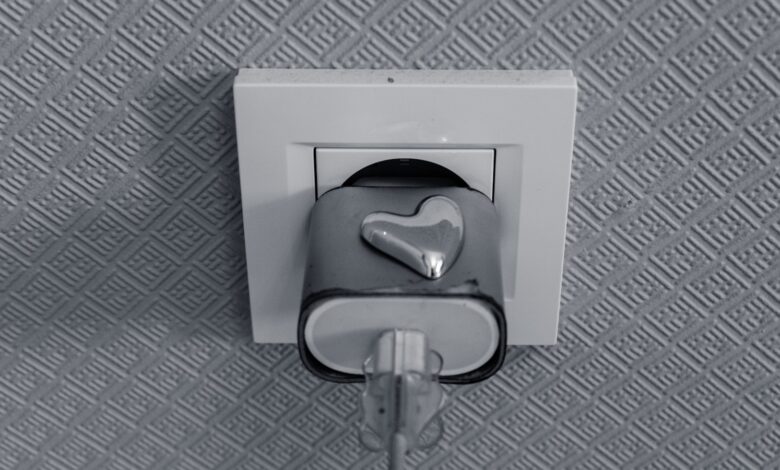
A plug-in socket tester is a small chunky plug with three indicator lights on it. You stick it in a powerpoint, look at the lights, and the legend on the tester tells you if the wiring is correct, if active and neutral are reversed, if earth is missing, or if there’s a serious fault. It’s the cheapest insurance policy in the house and there’s no licensing requirement to use one — it’s plug-and-play. Same as plugging in a kettle.
The catch: most cheap testers on Amazon and Temu are 110V American models. They’ll either not work at all on Aussie 230V, or they’ll fry the moment you push them in, sometimes with a satisfying flash. You need an AS/NZS-rated tester with a 230V Australian three-pin plug moulded into it. Jaycar sell one for $24.95 (the MS6860D), Bunnings stock the Arlec PT250 for about $19, and any decent electrical wholesaler has the Fluke ST120 for $50. That’s it. That’s the kit.
For context — the most common faults in Aussie housing are open earth (about 1 in 30 GPOs in pre-1980 homes that haven’t been rewired) and reverse polarity (around 1 in 200 GPOs across all stock, but more like 1 in 20 in homes where the previous owner did anything DIY behind a face plate). Outdoor and shed circuits are much worse — I’ve tested rural sheds where literally every GPO had something wrong. If you’ve just bought a house, this 30-minute walkthrough is the cheapest pre-renovation diagnostic you’ll ever do.
What you’ll need
- An AS/NZS-rated plug-in socket tester with three pins (active right, neutral left, earth bottom — looking at it)
- A torch if your powerpoints are behind furniture
- Five minutes per room
Step 1: Buy the right tester
Standing in Jaycar holding two boxes? The MS6860D is the one. It has GPO standard 230V Aussie pins, three LED indicators, and a legend printed right on the body. Don’t bother with the ones that have a “GFCI test” button — Aussie RCDs are at the switchboard, not the powerpoint, and the test button on these testers is designed for US-style outlet GFCIs. It won’t hurt anything but it’ll do nothing on a normal Aussie GPO.
Step 2: Test the tester on a known-good powerpoint
Before you trust the readings, calibrate your expectations. Plug it into a powerpoint you’ve used recently — your kitchen bench, the one your toaster runs off. If the lights show “correct wiring” (usually two yellow + one red, but check the legend on YOUR tester — different brands use different colours), you’re good. If they show a fault, either that powerpoint is wired wrong, or your tester is faulty. Try a second known-good outlet to confirm.
Step 3: Walk every room
Start at one end of the house and work systematically. Bedrooms, lounge, hallway, kitchen, laundry, garage. Every powerpoint, every gang. If a 4-gang has one switch off, turn it on first — testers need power to read. Note the room and the result on a notepad: “Lounge GPO behind couch — correct” or “Bedroom 2 — open earth”.
Step 4: Read the result honestly
Common patterns and what they mean:
- Correct wiring — active, neutral, earth all present and in the right pins. Move on.
- Open earth — no earth wire, or earth disconnected. Common in pre-1980 homes that never got upgraded. The powerpoint still works but appliances with metal cases (kettle, toaster, washing machine) have no earth fault path. Get a sparky.
- Open neutral — the appliance won’t even run. You’ll know.
- Open active — same. Dead point.
- Reverse polarity (active/neutral swap) — appliance still runs, but the switch on the appliance now interrupts neutral instead of active, meaning the appliance internals stay live even when “off”. This kills people who open up “off” appliances.
- Active/earth reverse — rare but lethal. Earth wire is now live. Touch the metal case of any earthed appliance and you complete the circuit through your body. Get a sparky immediately and don’t use that point.
Step 5: Test outdoor and shed powerpoints
Outdoor GPOs and shed circuits are the most likely to be dodgy — they’re usually retrofits done by previous owners in the 1990s when “her brother who does electrical” was a common phrase. Pop the weatherproof flap, plug in, read. If your shed was wired by the previous owner, expect at least one fault.
Step 6: Test wet-area powerpoints
Bathroom shaver outlets, laundry GPOs near the trough, kitchen splashback points. These should ALL show correct wiring, and they should ALL be on an RCD-protected circuit. If you’ve also got an RCD tester (Fluke 1AC plus the RCD test button on the MS6860D-PRO model), you can verify the RCD trips within 40 ms — but the basic test of presence and polarity is the important one.
Step 7: Document the results
Write the date, the tester model, and a list of any faults on a single sheet. Stick it inside the switchboard cupboard. When you sell the house, that document is gold for the building inspection. When the next tenant moves in, you can hand it over.
Step 8: What to do with a fault
Don’t use the faulty point. Stick a strip of red electrical tape over it with “DO NOT USE — FAULT” written on it. Most reverse-polarity faults are fixed in 10 minutes by a sparky — they pop the cover, swap two wires, refit. A typical call-out for a single point is $90–$140. If you’ve found three or four faults in one circuit, ask the sparky to quote the lot together — they’ll discount.
Step 9: Re-test after any work
Whether the work was DIY-adjacent (a sparky fitted a new oven) or a full rewire, plug your tester into every affected point AFTER the sparky leaves. They should have done this themselves and given you a CoES, but a 10-second double-check has caught at least three jobs in my career where someone (me, included, once) put back a face plate with the wires on the wrong terminals.
Step 9a: USB-C and double GPO oddities
Modern Aussie GPOs often include integrated USB-A and USB-C charging ports — Clipsal Iconic, HPM Excel, Legrand Excel Life all do versions. The plug-in tester only checks the 240V pins, not the USB output. To check USB output, plug a USB voltmeter (Klein USB-A/C tester, $25) into each port and verify 5V is coming out clean. Faulty USB modules don’t trip RCDs because they’re isolated, but they can cook your phone over time.
Double GPOs share neutral and earth between the two outlets but have separate actives. Test each side independently. Sometimes only one side has a fault — the right outlet of a double can be reverse-polarity while the left is correct, or vice versa. Don’t assume that one good reading covers both.
Step 10: Lend the tester to friends
Honest sales pitch: $25 splits across five mates is $5 each, and every house in the country has at least one weird powerpoint. Hand it round. The renter who finds out their bathroom GPO has open earth has just dodged a serious shock.
Step 11: When to upgrade vs when to repair
If you find one or two faults across a 30-GPO house, get them repaired — point fix, $90–$140 each. If you find a quarter or more of the GPOs faulty, you’re looking at a circuit-level problem, not an outlet-level problem, and a partial rewire is more economic than chasing individual repairs. A sparky can quote a “circuit replacement” — pulling out and replacing one section of cabling and all GPOs on it — for around $1,500–$3,000 depending on access.
If your house is pre-1970 and still has any of the original wiring intact (cloth-insulated VIR, lead-sheathed cable, or old TPS without an earth conductor), the answer is almost always full rewire. The faults you’re finding with the tester are symptoms; the cable insulation itself is degraded and getting worse every year. Full rewire ranges from $8,000 for a small cottage to $25,000+ for a large two-storey, but it adds significant property value and gets you 50 years of safe wiring.
The Ash rule
You can’t legally rewire a powerpoint, but you absolutely can test one — and the test is what matters. The number of “she’ll be right” wiring jobs hidden behind innocent-looking face plates in Aussie rentals would shock you. A $25 plug-in tester is the only legal, reliable way for a non-sparky to know what’s actually behind the GPO. Buy one. Use it. Hand it over to the next tenant when you move out.
Got a powerpoint horror story you’ve solved? Send us a write-up.