How to Move a Fridge Without Wrecking the Compressor (or the Floor)
Got called out to a place in Wallsend a few years back to “have a look at a fridge that won’t cool”. Beautiful brand-new 600L LG French-door, two weeks old, owners had just moved in. They’d shipped it from their old place laying on its side in the back of a mate’s flat-top ute, “for half an hour, mate, no worries”. Switched it on within an hour of getting it into the new kitchen. Within a fortnight it was tropical inside the fridge and there was a noise from the compressor like a dying lawn mower. Compressor oil had run into the cooling coils. Quote to fix: $1,500. Could’ve been avoided with one rule: never lay a fridge on its side, and if you have to, leave it stand 24 hours before powering on.
The fridge is the heaviest single thing in most Aussie homes — a 600L family fridge weighs 90–110kg empty, and its awkward, top-heavy, and full of bits that scratch floors. Half the moving-day damage I get called to assess is a fridge dragged across timber floors, dropped down concrete steps, or tipped on its side and left there for hours. Done right, you can move a fridge with two adults and a $30 trolley without scratching a floor or killing the compressor.
What you’ll need
- An appliance trolley (also called a fridge dolly) with strap — hire from Bunnings or Kennards, $25–40 a day
- Two heavy-duty moving blankets (also hireable)
- A 4m ratchet strap
- A roll of masking tape (not duct — pulls paint)
- An old towel
- Two adults — this is genuinely a two-person job
- A tape measure to check doorway clearances
Step 1: 24 hours before — turn the fridge off and let it defrost
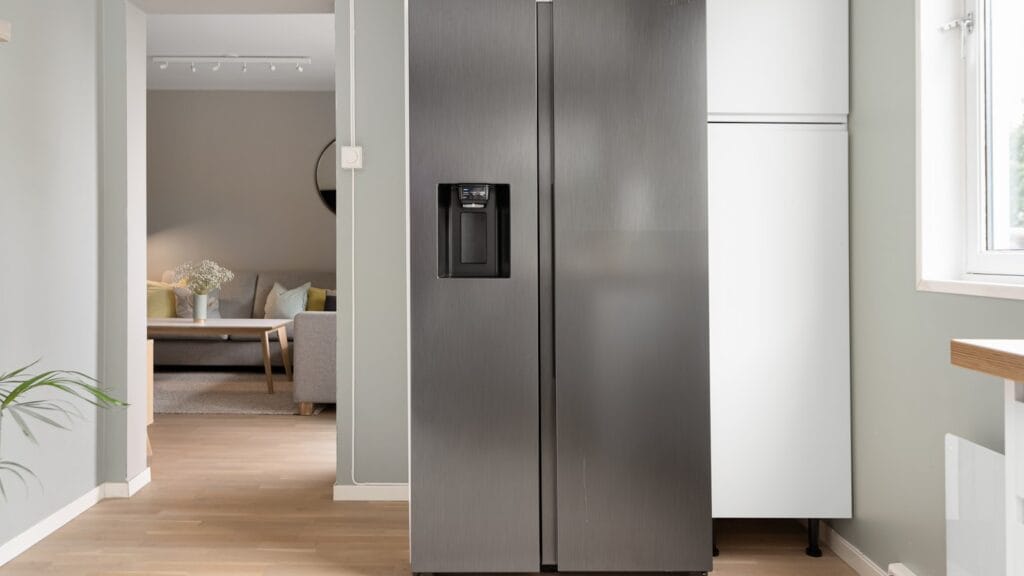
Turn off at the wall, prop the doors open, put towels under the freezer compartment to catch melt water. The freezer must be fully defrosted before moving — a half-frozen freezer drips inside the fridge during the move, which then drips out the back during transport, which is how moving trucks get fridge-shaped puddles in them.
The why: ice in the freezer is essentially a 5–10kg lump that shifts during transport and bashes the freezer wall. Defrosted freezer is light and quiet.
Step 2: Empty everything and clean it out
The fridge moves empty, full stop. A full fridge is 30–40kg heavier and the contents shift during the lift, which throws your centre of gravity off. Wipe shelves and drawers with a mild detergent — a half-day in summer with closed doors and old food residue smells like a hostel laundry. Leave doors slightly ajar in storage so it doesn’t stink.
If you’re moving a washing machine on the same day, our move washing machine guide covers the transit bolts you’ll need.
Step 3: Tape doors shut
Masking tape (not duct tape — duct tape pulls paint off and leaves goo that’s a nightmare to clean) across each door, top to bottom. Two strips per door minimum. Doors swinging open during a tilt is a finger-crusher and a bent-hinge mid-move. I’ve seen blokes lose fingernails this way. Don’t be that bloke.
Step 4: Tape down the power cord
Coil the cord and tape it to the back of the fridge. A trailing power cord gets stepped on, tripped over, or caught in a wheel — and a yanked cord at the fridge end can damage the internal wiring. While you’re at it, tape the water line too if it’s a plumbed fridge with an ice maker.
Step 5: Walk the move first — measure doorways and clearances
Tape-measure every doorway, hallway corner, and stair tread between the fridge and the truck. A 700mm-wide fridge will not go through a 680mm doorway with the door on. If it’s too tight, you can pull the fridge doors off — most modern fridges have hinge caps that pop with a screwdriver — but plan that before lift day, not when you’re stuck in the hallway with two blokes holding 100kg of Samsung.
Common mistake: measuring the door opening but not the architrave. Architraves stick out 15–20mm and reduce the effective clearance. If you’re packing the kitchen as you go, our pack kitchen for moving guide steps through the order of operations so the fridge isn’t the last thing fighting through a hallway full of boxes.
Step 6: Wrap the fridge in moving blankets
Two blankets, secured with the ratchet strap around the fridge body. The blankets protect the paint and corners and stop the trolley from gouging the side panels. Don’t strap so tight you crush the blanket flat — snug, not crushing. Over-tight straps dent thin sheet-metal side panels permanently.
Step 7: Slide the trolley under, tilt back gently
Position the trolley flush against the side that will tip. Have person A hold the top of the fridge while person B kicks the trolley plate under the bottom. Tip back slowly to a 45° angle — never more — and engage the trolley strap around the fridge. Listen mate, this is where alot of fridge moves go wrong: people tip past 45° and the centre of gravity gets above the trolley axle, which means it wants to keep tipping. Stop at 45°.
Step 8: Move slowly, with one person on the trolley and one steadying the top
The person on the trolley walks backwards. The other person walks forwards with hands on the top steadying — they don’t carry weight, they prevent toppling. Slow, steady, talk to each other on every step, especially on stairs. “Coming up”, “stop”, “left a bit” — communication beats brute strength every time.
Step 9: Stairs — never one person, always two, and never on its side
Stairs are where injuries happen. Lower a stair at a time with the trolley tilted away from the stairs, the person on top guiding. Never lay a fridge on its side to “drag” it down stairs — apart from the obvious risk of dropping it, lying a fridge on its side means oil from the compressor can run into the cooling coils. If that happens, the fridge needs to stand upright for at least 24 hours before you turn it on, or you’ll wreck the compressor like the bloke in Wallsend.
If you’ve got a heavy single-flight staircase, two healthy adults are enough. A double flight or a tight 180° turn — three people, or pay a removalist with proper stair-climbing kit.
Step 10: At the new house — let it stand 4 hours before turning on
Even an upright move shakes oil around in the compressor. Stand it upright in its new position, plug in but leave switched off for at least 4 hours (24 hours if it spent any time on its back or side). Then turn on at the wall and let it cool empty for an hour before loading food.
If you’re packing the rest of the house at the same time, our flat-pack assembly guide covers the dismantle-and-rebuild approach for wardrobes that won’t fit through the new house’s doors.
What about chest freezers and bar fridges?
Same rules apply with one quirk. Chest freezers travel upright like a regular fridge — never on the lid. The compressor is at the back-end of the unit, same oil-runs-into-coils risk if you tip them. Bar fridges and small drinks fridges (under 60kg) can be moved by one healthy adult with a regular sack truck, no special trolley needed. Same 4-hour standing rule before turning on. American-style French-door fridges are the bigger challenge — these are 150–200kg and the doors are wider than most internal doorways, so plan to remove the doors before you start, not halfway through. Hinge caps pop with a flathead screwdriver, the door lifts straight up off the pins, reinstall is the reverse at the new house. Allow 20 minutes per door.
When to call a tradie
Most fridge moves are DIY. But there’s a few situations where you pay the removalist: any French-door or American-style fridge over 120kg (these need a proper appliance trolley with strap and two trained blokes), any move involving more than one flight of stairs, or any plumbed fridge with an ice maker where you don’t fancy disconnecting and reconnecting the water line. Plumbed connections aren’t sparky-licensed work but the supply isolation valve and braided line can be fiddly — and if you snap a Reece fitting you’ve got a flood. Better to pay a plumber $150 for a proper disconnect-reconnect than mop water out of the kitchen for two days.
Common screw-ups
- Laying the fridge on its side or back — compressor oil into cooling coils, $1,500 repair
- Plugging in immediately at the new house — same problem, even on an upright move
- Skipping the defrost step — water leaks all through the truck
- Using duct tape on doors — pulls paint, leaves residue that’s a nightmare to remove
- Tipping past 45° on the trolley — centre of gravity goes over and you can’t hold it
Cost & time
Trolley hire $25–40/day, blankets $20 to hire or $60 to buy, ratchet strap $15. Total $60–100 in kit. Time-wise, prep is 24 hours (mostly defrosting), the actual move is 30–60 minutes plus another 4–24 hours of standing time at the new place before power-on. Two-person job, definately not a solo gig.
Wrap-up
Never lay a fridge on its side. I’ve seen this advice ignored a hundred times — followed by a $1,500 compressor failure two weeks later. If your fridge has to go through a tight space and the only option is to lay it down, lay it on its front (the door side), with the back (compressor side) up. Never on the back. And whether front-down or upright, stand it for 24 hours before powering on. Easy as. Save yourself the heart attack when the new kitchen turns into a tropical biohazard.