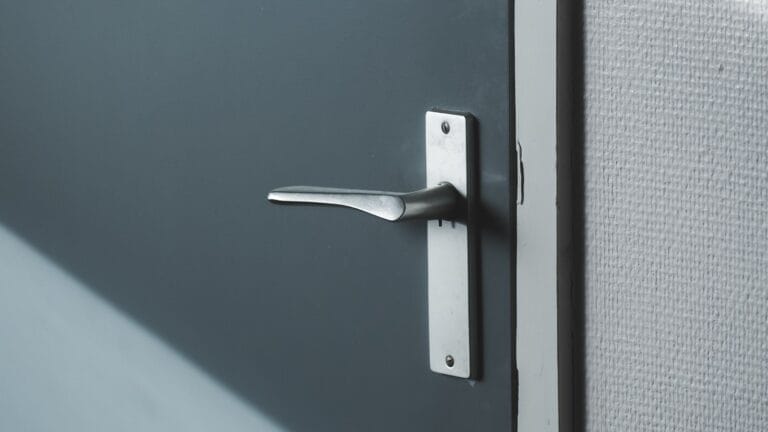
How to Replace a Doorknob and Deadlock
Supposed to be the easiest small job in the trade. Punter walks into Bunnings, grabs a Lockwood Cosmo or a Brava deadlock, takes it home, opens the box at 4pm on a Saturday, discovers his new lock has a 60 mm backset and the door is set up for 70 mm. Cue an angry call to me on Sunday morning. I had this exact scenario in Mayfield two months back. Bloke had stripped the old lock, fitted the new one part-way, realised it didn’t line up, then tried to “make it work” by drilling a fresh bore hole 10 mm to the left. Now he had two bore holes through the door, neither of them right, and a front door that wouldn’t lock at all. He’d been to Mitre 10 twice. We ended up replacing the door — $400 in timber, $90 in lock, half a Saturday. All because of one measurement he didn’t take.
Right, here’s the thing. Backset — the distance from the edge of the door to the centre of the bored hole — is the one measurement that catches 90% of DIY doorknob and deadlock swaps in Aussie homes. Australian doors are a mix of 60 mm and 70 mm backsets, sometimes within the same house. Older doors (pre-1980s) usually 60 mm. Newer doors mostly 70 mm. Some commercial-grade and security doors are 89 mm. Get it wrong and the lock either won’t fit or the bolt won’t engage the strike plate. The other gotcha — the insurance one — is AS 5039, the deadlock standard your home contents insurer expects on entry doors. A generic Bunnings deadlock may not be AS 5039 compliant, and if you get burgled and the assessor sees the lock, your claim can get reduced or denied. Here’s how I do a swap that ticks all the boxes.
What you’ll need
- The new lock — for entry doors, AS 5039 compliant deadlock (Lockwood 001, Brava Urban DX, Whitco Tasman MK2)
- Phillips and flathead screwdrivers
- Tape measure
- Cordless drill (Ryobi One+ or similar)
- 25 mm and 54 mm hole saws (for upsizing if backset is wrong)
- Wood chisel 25 mm and a hammer (for the strike plate)
- Pencil, masking tape
- Sandpaper 180 grit
- The existing strike plate as a template
Step 1: Measure the backset BEFORE you buy the lock
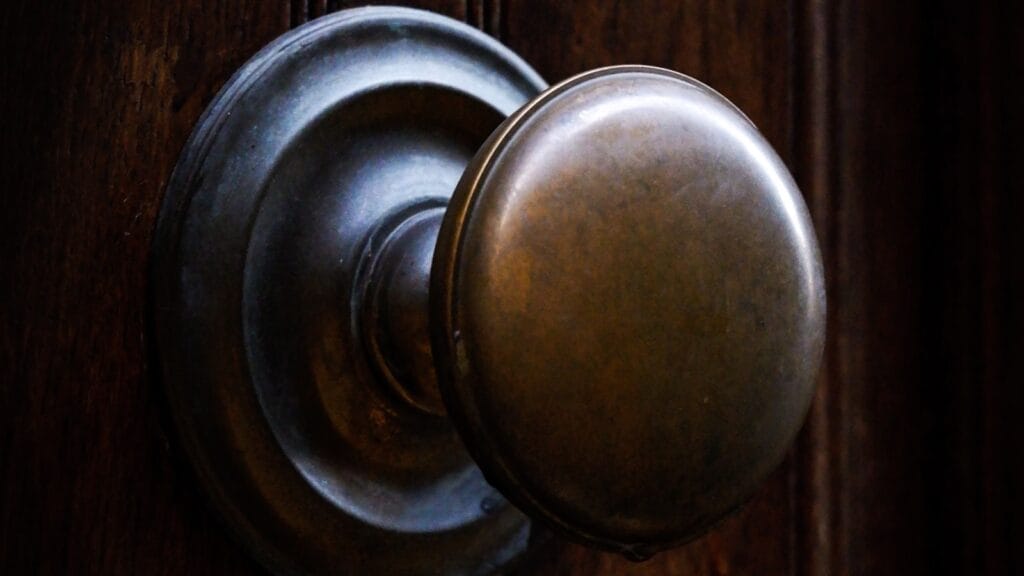
Don’t go to Bunnings first. Measure first. With the door open, measure from the door edge to the centre of the existing bored hole on the face of the door. That’s your backset. 60 mm or 70 mm. While you’re there, measure the bore hole diameter (usually 54 mm) and the latch hole on the door edge (usually 25 mm). And measure the existing strike plate cutout on the door jamb — note its position and depth.
Then go shopping. Most Aussie locks come with adjustable backset (60/70) — Lockwood and Whitco do — but cheaper Bunnings imports are fixed. Read the box. Listen mate, this is the one measurement that saves you a wasted weekend.
Step 2: Confirm AS 5039 compliance for entry doors
For front, back, and any external door — including the laundry door that opens to the carport — the deadlock must be AS 5039 compliant. Look on the box for the AS 5039 mark or the words “5-pin Australian Standard.” Lockwood 001, Brava Urban DX, Whitco Tasman MK2, Yale Curve all comply. Anything sold as a “knob lock” or “passage lock” alone is not enough on an entry door. AS 5039 means a 5-pin cylinder (not the cheap 3-pin) and a hardened-steel deadbolt that resists a hammer strike. Bare-minimum standard your insurer assumes is fitted.
Step 3: Remove the existing lock
From the inside face, undo the two screws on the rose. The rose pulls off, exposing the spindle. Outside knob and inside knob then separate. From the door edge, undo the latch faceplate screws (usually two Phillips) and slide the latch out. For a deadlock, the cylinder undoes from the inside; usually one set screw on the inside cover, then the cylinder threads out. Don’t lose the springs — there’s a small return spring inside that wants to escape.
Step 4: Inspect the door for damage
Old doors get worn around the latch. If the latch hole has chipped-out timber or the bore has cracks, fill with epoxy wood filler (Selleys Knead-It Wood) before fitting the new lock. New lock into a chewed-out hole = the lock works loose in 6 months. Five minutes of repair now saves a call-back later.
Step 5: Dry-fit the new lock to check backset
Before driving any screws, hold the new latch up to the bore hole. The latch tongue should sit centred in the bore. If it sits skewed (latch face on the door edge but the bore hole 10 mm off), you’ve got a backset mismatch and you need to either adjust the latch’s backset (most Lockwood and Whitco latches have a slide-out adjuster), or return the lock and buy the right one. Don’t try to “make it work” by drilling a new bore. The cosmetic mess is permanent and you’ll see the patch every day. Trust me — I’ve watched alot of blokes ruin a door learning this the hard way.
Step 6: Fit the latch first, faceplate flush
Slide the latch into the door edge. The faceplate sits in a recess (mortice). On most Aussie doors, the recess is 3 mm deep and the faceplate sits flush with the door edge. If the new faceplate is bigger than the old, you need to chisel the recess slightly larger — masking tape around the edges, mark the new boundary, chisel out 1 mm at a time. Secure the faceplate with supplied screws. Don’t over-tighten — you’ll strip the soft pine timber inside the latch hole.
Step 7: Fit the knob/lever assembly through the bore
From the outside, push the spindle through the bore so it engages the latch. From the inside, slide the inside knob onto the spindle. The two knobs join via two long screws that pull the roses together. Tighten gradually, alternating, until the knobs sit firm against the door without binding the latch. Test the action: turn the knob. The latch should retract smoothly. If it sticks, the knobs are over-tightened — back the screws off a quarter turn each. Easy as.
Step 8: Fit the deadlock above the knob
Aussie convention is deadlock 150 mm above the knob, centred on the bore line. If you’re swapping a deadlock for a deadlock, the holes are already there. If you’re adding a deadlock to a door that didn’t have one, that’s a hole-saw and chisel job — masking tape both sides of the door, mark the centre on both faces with a small drill bit going from one side, then hole-saw from each side meeting in the middle (drilling through from one side splinters the exit face badly). Cylinder out, throw the bolt to test, cylinder back in.
Step 9: Adjust the strike plate on the jamb
Close the door slowly and watch where the latch tongue contacts the jamb. Mark with pencil. Strike plate cutout should align with that mark. If it doesn’t: 2 mm out, file the strike plate hole bigger. 5 mm or more out, plug the old cutout (timber filler or a glued-in plug) and chisel a new cutout in the right place. The deadbolt strike needs a deep cutout — 25 mm minimum. A shallow strike means the deadbolt only half-engages and a forced-entry attack pops the door. If your front door also needs the hinge side checked, the principles in adjusting cupboard door hinges transfer to full-size door hinges too — and if the door itself sticks, see fixing a sticking interior door.
Step 10: Test 50 times, cut spare keys, lubricate
Lock and unlock from inside. Lock and unlock from outside with the key. Throw the deadbolt with the door open, then close — does the bolt enter the strike cleanly? Slam the door gently — does the latch catch? Try the key from outside while the door is closed and locked. Hand the key to a household member and have them try. I do this 50 times. If anything sticks or hesitates even once, find it now, not at 11pm when you’re locked out. Take both supplied keys to Bunnings or Mister Minit and cut at least two spares immediately — fresh originals cut perfectly, worn copies of copies start jamming the lock. Register the key code (printed on the key or lock packaging) somewhere safe. Once a year, one puff of graphite-based lock lube (INOX MX2 dry-film or Lockwood-branded) into the keyway. NEVER WD-40 — oil-based lubes attract dust and gum the cylinder up. If you’re upgrading entry security generally, the next obvious step is testing your smoke alarms while you’re checking compliance gear.
When to call a tradie
Locksmiths or licensed installers needed for: keyed-alike systems across multiple doors (you want one key for front, back, garage, shed — locksmith re-pins to match), restricted-key systems (where copies require ID and authorisation), and any electronic or smart lock that needs hardwired power (sparky required for fixed wiring under AS/NZS 3000). Also call a locksmith if you’ve inherited a house from someone you don’t fully trust — new cylinder and complete re-key, $150-250 and worth every cent for peace of mind.
Common screw-ups
- Buying before measuring backset. 60/70 mismatch means lock won’t fit. Always measure first.
- Drilling a new bore to “make it fit.” Permanent cosmetic damage to the door.
- Over-tightening the rose screws. Binds the latch — door won’t open from outside.
- Buying a non-AS-5039 lock for an entry door. Insurance assessor will reduce your claim.
- Using WD-40 in the cylinder. Gums up the pins within months. Graphite only.
Cost & time
Lockwood 001 deadlock at Bunnings is around $80-110, full knob-and-deadlock kits $150-250. Hole saws and bits about $25-40 if you don’t own them. Time: 45 minutes for a same-backset swap, 90 minutes if you need to chisel a new strike position or upsize the bore. Compare to a locksmith call-out at $150-200.
The Mick wrap
The Mick rule for doorknobs and deadlocks: measure the backset, buy AS 5039, test 50 times. Backset gets you to a lock that physically fits. AS 5039 keeps your insurance valid. Fifty tests find the binding before it strands you. Skip any of those and the cheap lock you bought for $89 ends up costing $400 in locksmith call-outs and possibly a denied insurance claim. Don’t be that bloke who finds out on a Sunday morning.