How to Replace a Damaged Fly Screen Without Buying a New Frame
I was at a quote in Merewether last summer. Lovely art-deco place, lady of the house had been told by a “window guy” that her four damaged fly screens needed replacing at $89 each. That’s $356 for what is genuinely a 20-minute job per screen with about $30 of materials. The frames were aluminium, perfectly straight, no corrosion. They just needed re-meshing. I did all four while she made me a flat white and explained why her cattle dog Roxy had eaten the bottom corner of the kitchen screen. Walked out 90 minutes later with $50 in my pocket and her offering to send three neighbours my way. That’s the job.
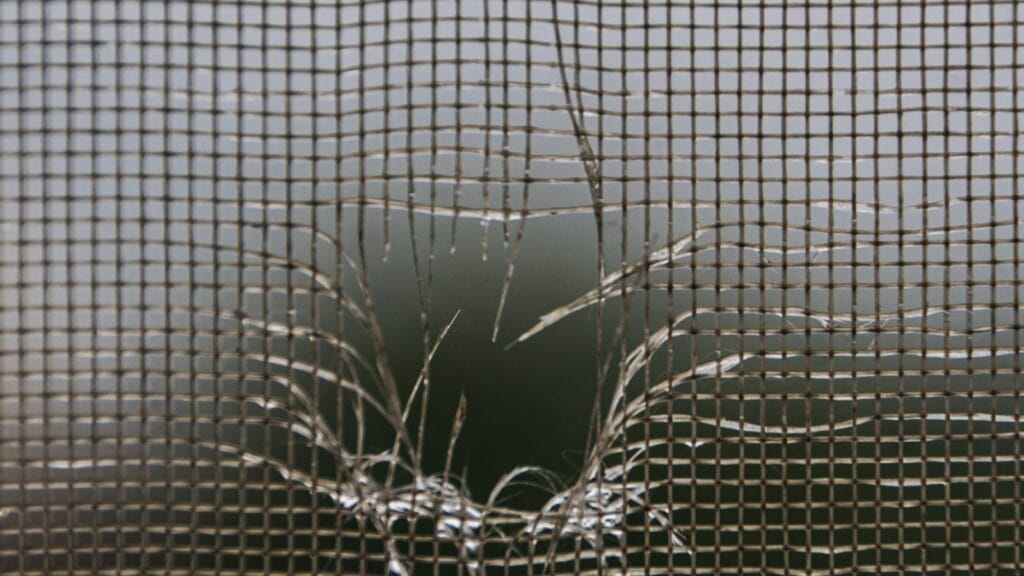
Right, here’s the thing. Fly-screen replacement is one of those repairs where the marketing has run away from reality. Bunnings sells a spline tool for $8.50, a roll of charcoal mesh for about $25, and that gets you four to six screens depending on size. Most blogs tell you to chuck the frame because the YouTube algorithm rewards replacement content over repair content. The frame is fine. It’s the mesh and the spline that fail. And there’s an Aussie-specific catch nobody mentions: standard fibreglass mesh is rubbish in our sun. Two summers of UV on a north-facing window in Newcastle and it’s brittle enough to poke a finger through. I’ll tell you what to use instead so your not back here doing this in two years.
What you’ll need
- Spline roller tool — the little wheel on a handle, Bunnings $8.50, Cyclone brand is fine
- New spline cord — measure your old spline diameter first, usually 4 mm or 4.5 mm
- Charcoal-coloured polyester or aluminium mesh — NOT fibreglass for anywhere that gets afternoon sun
- Stanley utility knife with fresh blade (worn blades tear mesh)
- Flat-head screwdriver for prying out the old spline
- Scissors
- Bricks or heavy books (four of them) to weigh the frame flat
- A clear bench or kitchen table you can work on without scratching
Step 1: Pop the screen out of the window or door
Most Aussie sliding fly screens lift up and out — push up firmly, swing the bottom out, lower. Fixed screens usually have small clips or screws at the top edge. Don’t lever from the mesh side or you’ll bend the frame, and a bent aluminium frame really does need replacing because you can never get it back perfectly square. Lay the frame flat on your bench, mesh-side up.
Step 2: Identify the spline channel and spline diameter
Look at the inside edge of the frame — there’s a groove (the spline channel) that holds a round rubber cord (the spline) which traps the mesh. Use the flathead screwdriver to lift one corner of the old spline up. Once you’ve got an end, pull steadily and it usually comes out in one piece. Measure the cord’s diameter with vernier callipers or just take the offcut to Bunnings to match. 4 mm and 4.5 mm look almost identical and the wrong one either won’t grip the mesh or won’t sit in the channel. Common mistake: guessing the size and ending up with spline that keeps popping back out — drives you mental.
Step 3: Pull the old mesh off and clean the channel
The mesh lifts straight off once the spline’s out. Vacuum or wipe the channel — old fly bodies, dust, and bits of perished spline accumulate in there and stop the new spline seating properly. A toothbrush is good for this. Why bother? Because debris in the channel sits between the spline and the channel wall, and the spline can’t compress enough to hold the mesh. Five minutes of cleaning saves you from a screen that sags within a month.
Step 4: Choose the right mesh
The Aussie gotcha. Standard fibreglass mesh is the cheapest option at Bunnings and the most-recommended on US blogs because their UV is gentler. In Australia — especially anywhere from Newcastle north — fibreglass goes brittle in two summers on west or north exposure. Use either:
- Charcoal polyester mesh — UV-stabilised, lasts 7-10 years in Aussie sun, dark colour means you see through it better than the grey fibreglass
- Aluminium mesh — basically lifetime, bit harder to work with because it doesn’t stretch, but the right choice for coastal homes from Stockton to Cronulla
Don’t bother with stainless unless you’ve got a security need — three times the price and overkill for fly exclusion. Listen mate, if you’re up at the window doing this anyway, it’s the same workflow as a flyscreen replacement on a sliding door, just less mesh.
Step 5: Cut the mesh oversized
Roll the mesh out across the frame and cut it 50 mm bigger than the frame on every side. You’ll trim the excess later. Lay it flat with the weave running square to the frame — if it’s running on a diagonal you’ll get a lumpy finish that no amount of tensioning fixes. Take 30 seconds to align the weave; saves the whole job later.
Step 6: Start splining at one corner
Put the mesh in position. Take your new spline and push 30 mm of it into one corner of the channel by hand. Now use the convex (rounded) end of the spline roller to roll the spline down the long edge of the frame, pressing the mesh into the channel as you go. Moderate downward pressure — too hard and you’ll push mesh through and out the bottom; too soft and it won’t seat. Like rolling pizza dough — firm and steady, not hammering it.
Step 7: Tension the mesh as you go
This is the technique bit. After the first long edge is splined, gently pull the mesh taut across to the opposite long edge before you spline that side — but don’t yank it. Mesh should be drum-tight, not stretched-thin. Aluminium mesh doesn’t stretch at all so you just need it flat. Polyester will stretch a touch and that’s okay — drum-tight is the goal. Why does this matter? Over-stretched polyester plastically deforms and sags within months. Under-stretched mesh wobbles in the wind and bugs find the gaps. Drum-tight is the sweet spot.
Step 8: Do the short ends last
Once both long edges are splined, do the short ends. Don’t try to pull the mesh in two directions at once — you’ll get diagonal puckers and have to start over. Spline the short ends working from the centre out to the corners. Easy as.
Step 9: Trim the excess mesh
Stanley knife with a fresh blade. Angle the blade slightly outward so it slides along the OUTSIDE edge of the spline (not the inside). One smooth cut per side. Don’t saw at it — sawing leaves whiskers and makes the finish look rough. If you nick the spline while trimming, it’s fine, the spline isn’t structural. A fresh blade is critical here — a worn blade tears polyester mesh instead of cutting it.
Step 10: Reinstall and test
Pop the screen back in the window. Push gently against the mesh from outside — a properly tensioned screen feels like a snare drum. If you’ve got a soft spot where the mesh isn’t fully seated, the spline roller can usually fix it by rolling that section again. If the spline pops up out of the channel, the diameter is too small — pull it out and grade up to the next size. While the screen’s out, this is a good time to give the window track a quick once-over too — same principle as fixing a sliding door glide, just smaller scale.
When to call a tradie
The whole point of this article is you don’t need one for the mesh and spline. Where you do need a pro: bent or corroded aluminium frame (a window guy can supply a custom-sized replacement frame in 48 hours for $40-60), security screen doors that need a Crimsafe-certified installer (not DIY, the warranty depends on certified install), and any second-storey window where you’d need a ladder higher than you’re comfortable with. For the latter, have a read of ladder safety in Aussie homes before you go up — its worth the five minutes.
Common screw-ups
- Diagonal puckers across the screen. You tensioned in two directions at once. Lift one short edge’s spline out, re-tension, re-spline.
- Spline keeps popping out. Wrong diameter — too small. Grade up to the next size at Bunnings.
- Mesh tears at the corner during splining. Too hard on the roller into the corner. Ease pressure as you approach, push spline in with fingertip.
- New mesh sags in 6 months. Over-stretched during installation. Drum-tight, never stretched-thin. Plastic deformation is permanent.
- Used fibreglass mesh on a north window. Two summers and it’s brittle. Polyester or aluminium for any sun-facing screen.
Cost & time
Spline tool $8.50, mesh roll $25 (does 4-6 screens), spline cord $8. Per-screen cost roughly $5-7 in materials. Time: 20 minutes per screen once you’ve got the hang of it, 35 minutes for your first. Compare to $89 each from a window guy. Pet mesh upgrades are around $40/m² if you’ve got a cat or dog that pushes through.
The Mick wrap
The frame almost never needs replacing. The mesh and spline are the consumable parts. Use charcoal polyester or aluminium mesh — fibreglass is false economy in Australian sun, and you’ll be doing the same job again in two years if you cheap out. If you want it to last on a north or west window, spend the extra $5 on aluminium and forget about it for a decade. Good first DIY job too — low stakes, high payoff, you learn tensioning and clean knife work that carries over to a dozen other jobs.