The Aussie Backyard Makeover Guide (Under $5k)
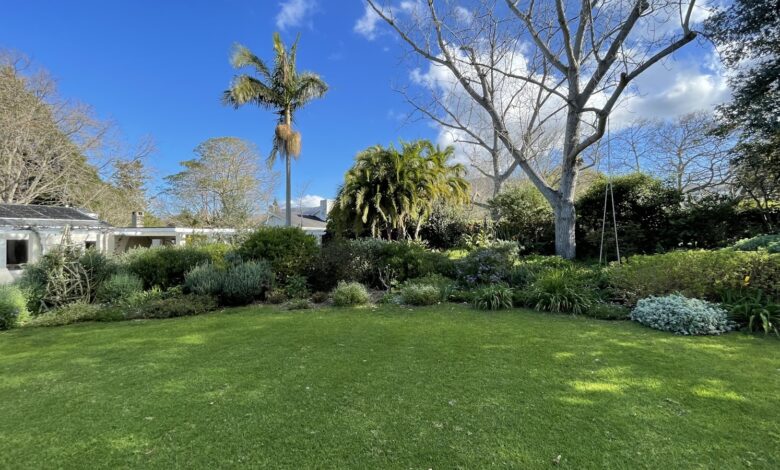
By the I Do It Yourself team — Cal, Steve and Mick.
This guide is for the home owner with a tired backyard, a $5,000 budget, and a few free weekends. Maybe the lawn is patchy, the deck is grey, the paving is cracked, and the outdoor furniture has been sun-bleached for so long it looks like it came from a bushfire site. We’ve all been there. The good news: a backyard transformation is one of the few projects where DIY effort gives you a near-professional outcome — most of the work is honest manual labour with hand tools, and the AS/NZS regulations are minimal compared to a wet area or electrical job.
Honest budget: $1,500 to $5,000 for a proper DIY makeover covering lawn revival, basic hardscape, deck refresh, furniture and planting. A landscaper-led version of the same job in 2026 will quote you $8,000 to $25,000. Timeline: 2 to 6 weekends depending on how much hardscape you’re laying. The biggest variables are weather (don’t try to lay pavers or oil a deck during a Perth summer heatwave or a Melbourne wet week) and how much demo you’re doing on existing surfaces.
What you’re getting into
A backyard makeover splits cleanly into five jobs: planning, lawn, hardscape (paving and paths), deck/alfresco refresh, and furniture-and-finish. None of them are licensed-trade jobs in Australia at this scale, and none of them require council approval if you’re not changing structures, drainage, fences over 1.8 m, or building a roofed alfresco. If you ARE adding a pergola roof, raised deck over 1 m, or any retaining wall over 1 m, check with your local council — most require a development application above those thresholds.
What stays DIY at this scale: turf laying, paving on a sand base, deck cleaning and re-oiling, fence painting, planting, irrigation drip lines, low-voltage garden lighting (12V plug-in systems). What you should outsource: anything involving 240V garden lighting (sparky), tree removal of anything over 4 m or near power lines (arborist), retaining walls over 1 m or that hold back a structure (engineer + builder), and concrete pours over about 5 m² (concreter).
Tools and budget
- Hand tools: square-mouth shovel, garden fork, rake, wheelbarrow, line and pegs, rubber mallet, spirit level (1.2 m), tape measure — $300–$400 if buying from scratch
- Power tools and hire: pressure washer (own a Karcher K4 — $400, or hire $80/day), rotary hoe (hire $130/day for lawn prep), plate compactor (hire $90/day for paving), petrol mower service kit
- Lawn: turf $10–$18/m² (Sir Walter, Empire Zoysia, Kikuyu) or seed $25/kg, lawn starter fertiliser $40/bag, top dressing soil $80/m³
- Paving: pavers $30–$80/m² (Boral, Adbri, Bunnings ranges), paving sand $80/m³, road base $60/tonne, paving sand-set jointing $25/bag
- Decking: deck cleaner ($45/4L), Cabot’s, Intergrain or Feast Watson decking oil ($90–$130 per 4L; budget 1L per 8 m²)
- Furniture: budget $400–$1,500 for a quality 6-seater outdoor setting from Bunnings, Temple & Webster, or Anaconda
- Plants: 50–100 tubestock plants at $4–$10 each, mulch $80/m³, garden edging $8–$15/lm
Phase 1: Audit and plan
Cal here. The Perth backyards I see ruined are always ruined the same way — somebody bought $2,000 of stuff at Bunnings on a Saturday morning, dumped it in the yard, and started without a plan. Three weekends later they’ve got a half-built path going to nowhere and a square of dead lawn that turned out to be the wrong species for their soil. Plan first. Spend will follow.
Walk your yard at three different times of day — early morning, midday, late afternoon — and note where the sun hits. North-facing patios in Australia get hammered by summer sun and you’ll need shade. South-facing corners get no winter sun and turf will struggle. Note where water pools after rain (those are your drainage problems before you commit to paving). Note which trees drop leaves where (you don’t want a deciduous tree dropping leaves into a swimming pool or a fine-pebble path you’ll have to rake every weekend).
Sketch a plan on graph paper. Don’t worry about it being beautiful — it just needs to show, to scale, where the lawn is, where the paths are, where you want the furniture, and where the planting beds run. Mark the existing trees and structures. This sketch costs nothing and will save you from at least two of the most common backyard-makeover mistakes: laying turf where the dog runs and creates a mud-pit, and laying pavers where rainwater pools.
Phase 2: Lawn revival
Cal here. Lawn is the cheapest big-impact element you can fix. A patchy yellow lawn brings the whole backyard down; a thick green one makes everything else look more expensive than it is. The honest answer is, in most Aussie backyards, you don’t need new turf — you need to rescue the lawn you’ve got.
The diagnosis: dig a small section out and look at the soil. If it’s compacted clay, you need to aerate and top-dress. If it’s sandy and the lawn just won’t hold colour, you need to feed and water more consistently. If the species is wrong for your area (couch in deep shade, kikuyu in clay, buffalo in coastal salt — all common mismatches), no amount of feeding will save it and you should returf in patches.
Reviving an existing lawn: aerate with a fork or hire a coring machine ($90/day), scarify out the dead thatch with a spring rake, top-dress with 10–15 mm of quality lawn soil (not garden mix — different product), apply a balanced lawn starter fertiliser like Munns Professional or Lawn Solutions Premium, water deeply for the first 3 weeks. A patchy lawn done this way comes back in 4–6 weeks during the growing season. If you’re laying fresh turf, do it in spring or autumn — never in midsummer in WA, NSW or QLD, the new turf will cook before it roots. Sir Walter buffalo is the most forgiving choice across most of Australia; Empire Zoysia is the premium pick for coastal areas; Kikuyu is the cheap-and-tough option if you don’t mind it being aggressive.
Phase 3: Hardscape — paths and paving
Steve here. Paving and paths are where DIY can save real money. A quote from a landscaper for 20 m² of basic paved patio in 2026 will land at $3,500–$5,500 supply-and-lay. The same job DIY in materials costs about $1,200 and a long weekend’s work. The catch: it has to be done properly or it will sink, lift, weed up and look terrible within two years.
The proper sand-base paving build: excavate to about 150 mm below your finished level. Lay 80 mm of road base (compacted in two layers of 40 mm with a plate compactor — hire one for $90/day, do not skip this step), then 30 mm of paving sand, screeded flat with a long board. Lay your pavers on the sand, butt-jointed or with 3–5 mm spacers depending on the look. Fall the whole thing 1:80 minimum away from the house — water has to run off and away, not pool against your foundations. Once laid, sweep paving sand or polymeric jointing sand into the joints, plate-compact again, sweep more sand, and you’re done.
For a path, the same build but narrower. For stepping stones through lawn, set each stone 50 mm proud of the lawn surface so it doesn’t get scalped by the mower, and space them at natural stride length (about 600 mm centre-to-centre for an adult). The most common DIY paving mistakes I see: skipping the road base (the pavers sink), not falling away from the house (water in the foundations), and not compacting the sand-set joints (weeds within a season).
Phase 4: Deck or alfresco refresh
Steve here again — decks are my thing. An Australian timber deck that hasn’t been oiled in 3+ years is grey, splintered, slippery when wet, and aging fast. Restoring it to looking new is a one-weekend job and it can buy you another 5–8 years of life out of the deck.
The process: pressure-wash the deck thoroughly with a 15° fan tip (never the 0° pencil tip — it gouges the timber), apply a deck cleaner (Intergrain Reviva or Cabot’s Deck Clean) and let it sit for 15 minutes, scrub with a stiff broom, rinse off. The grey weathered fibres lift off and the timber underneath comes back to its natural colour. Let dry for 48 hours minimum — moisture meter reading should be under 15% before you oil. Then oil with a good penetrating decking oil — Cabot’s Aquadeck if you want water-based, Intergrain Natural Stain Decking Oil for solvent-based, Feast Watson Traditional if you want maximum durability. Two coats, applied with a deck applicator pad, working with the grain, in the cool of the morning or late afternoon — never in direct midday sun, the oil flashes off before it penetrates.
If your deck has serious damage — cupping, rot, broken boards — replace those boards before you oil the whole thing. Spotted gum and Merbau (the most common decking timbers in Australia) are both available as replacement boards from Bunnings or any timber yard. Match the existing board width and thickness; predrill before you screw to stop splitting; use 65 mm decking screws in stainless steel (the cheap zinc-plated ones rust out within five years in any coastal exposure).
Phase 5: Outdoor furniture and finish
Mick here. The final weekend is the visible win — furniture goes in, planting goes in, lighting goes in, and the backyard suddenly looks like a finished space. The temptation is to rush this phase because the previous four weekends have been hard work. Don’t. The finishing touches are what carry the whole job.
Furniture: a quality outdoor setting from Bunnings, Anaconda or Temple & Webster runs $400–$1,500 for a 6-seater. Things to check: powder-coated aluminium frames last 10+ years in Aussie sun, untreated steel rusts out in 3, plastic-rattan looks cheap after one summer if it’s not UV-stabilised. Buy weather covers ($30–$80) for the off-season — they triple the life of the setting. Assemble it on the lawn or paved area where it’ll live, not in the garage — these things are heavier than they look once assembled and you do not want to carry one through a doorway.
Planting: 50–100 tubestock plants ($4–$10 each) will dramatically lift any backyard. For low-maintenance Australian-friendly options, mix natives (Westringia, Lomandra, Grevillea) with hardy exotics (lavender, rosemary, agapanthus). Mulch heavily — 75 mm of pine bark or hardwood chip — both for water retention and to stop weeds. For low-voltage garden lighting, the plug-in 12V Mercator and HPM ranges from Bunnings are home-owner-installable, look great washing across a deck or path, and add evening usability. Final job: stand back, crack a beer, and admit the backyard looks better than it has in years.
The team’s verdict
If we were doing this tomorrow on a tired suburban backyard with a $4,000 budget, this is the run sheet. Weekend one: audit, plan, order materials. Weekend two: lawn rescue (aerate, top-dress, feed) — start this early because it needs 4–6 weeks to come back. Weekend three: hardscape — lay any paths or paving. Weekend four: deck — clean, oil, replace any failed boards. Weekend five: planting and mulch. Weekend six: furniture, lighting, finishing. By the end of weekend six the lawn has had six weeks of recovery and the whole space looks coherent.
The thing we want to underline most: don’t try to do everything in one weekend. The lawn especially needs time to recover — if you lay turf and pave the patio in the same weekend, you’ll be walking on the new turf to wheelbarrow paving sand and you’ll wreck both jobs. Sequence matters. The other underline: budget for the boring underlayer of every job — road base under paving, lawn soil under turf, primer on a fence before paint. Skip the underlayer and the visible work above it fails within two years. Spend the extra $200 per phase. Your future self will thank you.
FAQs
What’s the cheapest way to get a green lawn fast? Aerate, top-dress with 10 mm of lawn soil, apply a starter fertiliser like Munns Professional, water deeply daily for 3 weeks. About $150 in materials for a typical backyard. The lawn recovers in 4–6 weeks.
Do I need council approval for a deck? Most councils allow a deck under 1 m above ground level without DA. Above 1 m, almost always yes. Pergola roofs over a deck often trigger DA. Always check your local council.
Sand-set paving vs concrete-set? Sand-set is fine for foot-traffic patios and paths. Concrete-set (mortar bed on a concrete slab) is needed for driveways or where a car will drive. For a backyard makeover, sand-set is almost always the right call.
Can I lay turf in summer? Not in WA, NT, QLD or northern NSW — the turf will cook before it roots. Spring or autumn always. Cooler southern states (VIC, TAS, ACT) have a wider window but avoid the hottest weeks.
How often does a deck need oiling? Every 12–18 months in full sun, every 2–3 years in a sheltered or shaded position. The way to tell: water drops should bead on the surface; if they soak in, it’s time to oil.
Got a project we should write a guide for? Tell us.