How to Build an IKEA PAX Wardrobe Without Damaging the Wall
Right, here’s the thing. I got a call last winter from a young couple in Cardiff who’d had their PAX wardrobe up for about three weeks. Lady of the house opens the door one Saturday morning to grab a coat, and the whole 2.4 metre tower decides it wants to come visit. Bang. Onto the bed. Fortunately the bed was unoccupied, but they had a 12-month-old in the next room who would have been very keen on investigating the noise. The IKEA wall anchor had pulled clean out of the plasterboard, the foam plug still attached, sitting on the carpet like a little plastic mushroom. Total time the anchor had been holding 80 kg of cabinet and clothes: 23 days.
That’s not a one-off. I do about one PAX rescue a month. The problem isn’t the cabinet — PAX is engineered properly, lasts forever. The problem is that IKEA designed the wall fixing for European houses where studs sit at 625 mm centres in 16 mm Gyprock. Aussie homes have studs at 450 or 600 mm centres in 10 mm plasterboard. The bracket holes don’t always line up with a stud, and the supplied foam plug is rated for thick German Knauf board that’s basically twice as strong as our Gyprock. Listen mate, the official IKEA instructions don’t mention any of this. So here’s how to do it properly the first time.
What you’ll need
- An IKEA PAX cabinet (any size)
- A stud finder — Bosch Truvo or GMS 120 ($80-150) — magnet finders don’t work on metal-stud walls
- Snaptoggle 10 mm plasterboard anchors (pack of 4, $18 at Bunnings) as a stud backup
- 30 mm or 40 mm #8 wood screws (for stud fixings — better than the IKEA-supplied ones)
- A drill with 6 mm and 12 mm bits
- A 1.2 m spirit level
- A pencil and a tape measure
- An Allen key set (a real one with a handle, not the IKEA one)
- 2 hours of patience and a podcast
Step 1: Build the cabinet flat on the floor
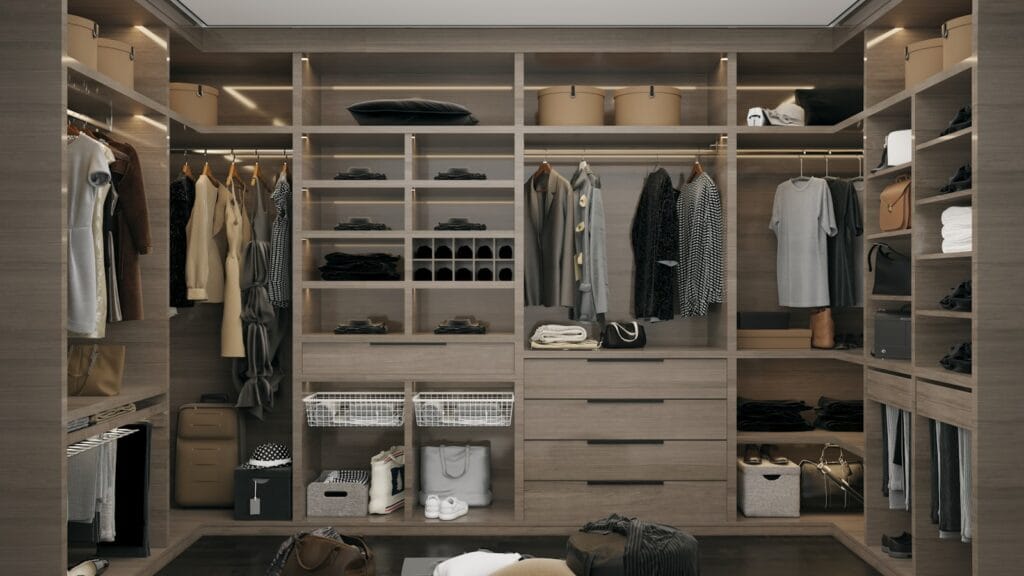
PAX is 2,360 mm tall. Don’t be that bloke who tries to build it vertical — you’ll snap a side panel and that’s a phone call to IKEA you don’t want to make. Lay it flat. Follow the supplied instructions for the carcass build — top, bottom, sides, back panel hammered into the rebate. Doors stay off until everything’s anchored.
The hardboard back panel is the bit that holds PAX square. Skip the back-panel pin nails and the whole carcass will rack on you when you stand it up. Pin every nail.
Step 2: Mark the stud line on the wall before you stand the cabinet
This is the bit IKEA doesn’t tell you and the bit that saves you alot of grief later. Before you lift the cabinet upright, run the stud finder along the wall at 2,000 mm height — that’s roughly where the PAX bracket will land. Mark every stud you find with pencil. Across the 1,200 mm cabinet width you’ll usually find 3-4 studs depending on spacing. Knowing where the studs are before you commit to a cabinet position is the difference between a 20-minute job and a frustrating afternoon.
If you’ve got a modern apartment or a 2000s+ build, you might be on metal studs. Magnet finders won’t read them — you need an electronic finder like the Bosch Truvo. Have a quick read of how to use a stud finder properly if you’re not confident yours is telling you the truth.
Step 3: Stand the cabinet up — two people
A flat-built PAX is around 60 kg. Two people, one each end, walk it up. Position 50 mm from the wall to give yourself room to fit the wall bracket behind. My back’s not what it was — I’m not lifting this on my own anymore and neither should you.
Step 4: Locate the supplied wall bracket
PAX ships with a metal wall anchor — an L-shaped bracket that screws into a sliding channel on the inside top of the cabinet, then to the wall via a single screw point. Find it in the hardware bag. The cabinet side attaches first — slide it into the channel, position it roughly above where you marked your stud, snug it up.
The clever bit is that channel — there’s about 235 mm of left-right adjustment. That’s enough wiggle room that on most installs you can position the cabinet wherever you want and still hit a stud somewhere.
Step 5: Mark the wall through the bracket hole
With the cabinet positioned exactly where you want it (use the spirit level to confirm vertical), reach inside and mark the wall through the bracket hole with a sharp pencil. Then pull the cabinet 200 mm forward — gives you room to drill without smashing the drill chuck into the back of the carcass.
Step 6: Decide — stud hit or toggle?
Look at your pencil mark vs the stud lines from Step 2. Is your mark within 30 mm of a stud line? If yes, slide the bracket along its cabinet-side channel until it lines up exactly with the stud, re-mark, then drill and screw direct into timber.
If the bracket genuinely can’t reach a stud no matter how you slide it — happens about a third of the time — you’ll need a Snaptoggle. Right, here’s the thing about the supplied IKEA plug: it’s a soft foam expansion plug designed for 16 mm European drywall. In our 10 mm Gyprock it pulls out under any lateral load. Don’t use it. Ever. Bin it the moment you open the bag.
Step 7: Stud fix — drill 3 mm pilot, drive 40 mm wood screw
Pilot hole 3 mm into the stud. Drive a 40 mm #8 wood screw through the bracket. Don’t use the IKEA-supplied screw if you’ve got the choice — it’s a coarse-thread chipboard screw that binds in timber studs and the head shears off easily under torque. A proper Bunnings or Mitre 10 wood screw is about 30 cents and infinitely better.
Step 8: Toggle fix (if no stud) — 12 mm hole, Snaptoggle
Drill a 12 mm hole through the plasterboard. Push the Snaptoggle through, pull the metal toggle bar tight against the back of the plasterboard, snap off the plastic legs, then drive the toggle’s machine screw through the bracket and into the toggle. Easy as.
One Snaptoggle holds 73 kg in 10 mm plasterboard — way more than the lateral tip-over load PAX exerts. Two Snaptoggles (use both bracket hole positions if your bracket has them) is bulletproof. I’ve seen these in 20-year-old installs come out cleaner than the day they went in.
Step 9: Push cabinet back, anchor screw home
Slide the cabinet back against the wall. Reach inside, snug the anchor screw fully tight. The cabinet should now resist a firm pull-out at the top — give it a proper tug to confirm. Not a gentle wiggle, an actual tug. If it moves more than 2-3 mm, your anchor isn’t holding properly and you need to investigate before you load it with clothes.
Step 10: Hang the doors and adjust
Doors hang on the bottom hinge first, then click the top hinge in. PAX hinges are Blum-clones with three-way adjustment — left/right, up/down, in/out. If your floor isn’t level (most aren’t), level the cabinet first using the adjustable feet underneath, then hang the doors. Hanging doors on an out-of-level cabinet means you’ll be re-adjusting hinges forever — and if you’re not familiar with how those hinges work, my mate’s guide on adjusting cupboard door hinges walks through each of the three adjustment screws.
When to call a tradie
If the wall behind your cabinet is solid brick double-skin (older Newcastle terraces, pre-1950 homes), you’re into masonry drilling and that’s outside the IKEA-supplied bracket spec. Get someone with a hammer drill and proper masonry anchors. Same if the wall has an exposed steel column or you suspect there’s electrical or plumbing running where you want to drill. A sparky or plumber call-out for a quick scan is way cheaper than punching through a live cable.
Common screw-ups
- Trusting the foam plug. It will pull out. Maybe not on day one, but within a year. Definately. Use a Snaptoggle every time.
- Building it vertical to save floor space. Side panels are pre-drilled assuming flat assembly — vertical build cracks the pre-drilled holes and the cabinet ends up racked.
- Skipping the back-panel nails. No nails = no torsional rigidity = doors that never line up no matter how much you fiddle.
- Loading it with clothes before the anchor is in. 80 kg of clothes pulls a free-standing PAX forward off vertical. Anchor first, load second.
- Hanging doors before levelling the cabinet. You’ll chase the gaps forever and never get them right.
Cost & time
PAX cabinets run from about $250 (basic 75 cm frame) to $700+ for the full 200 cm with doors. Add $25-30 for proper anchors and screws if you’re upgrading from the supplied hardware. Time: 2 hours for one person, 90 minutes with two. Plus a quick trip to Bunnings if you discover you need toggles mid-job — factor that in.
The Mick wrap
PAX is a good cabinet and it’ll outlast its own warranty by a couple of decades if you anchor it right. Hit a stud where you can, Snaptoggle where you can’t, and never trust that foam plug. Ten extra minutes to do the anchor properly is the difference between a wardrobe that lasts 20 years and the call I had to take that morning in Cardiff. The cabinet itself is honest work — it’s the wall fix that ruins them. If you’re doing your first flatpack, have a look at my flat-pack assembly guide for the general rules before you open the PAX box. Don’t be that bloke who shortcuts the anchor.