The Aussie Bathroom Renovation Guide
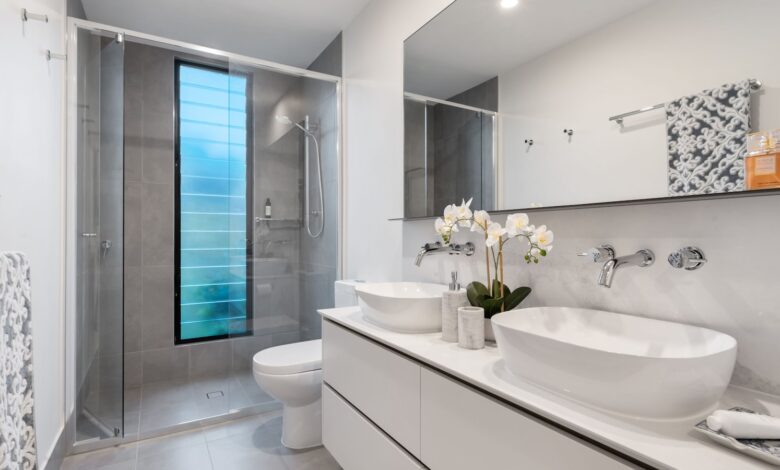
By the I Do It Yourself team — Steve, Tomo, Mick and Priya.
This is the guide we wish someone had handed us before our first bathroom reno. It is written for an Australian home owner who is comfortable swinging a hammer and following instructions, but who has never gutted a wet area before. We will tell you exactly which bits you can legally and sensibly do yourself, and which bits absolutely need a licensed plumber, sparky and waterproofer to sign off — because in Australia, getting that wrong costs you your insurance, your resale, and sometimes the ceiling below.
Budget honestly. A DIY-trade hybrid bathroom — where you do demo, tiling, painting and fit-off, and you pay licensed trades for plumbing rough-in, waterproofing certification and electrical — runs $8,000 to $25,000 in 2026 dollars for a standard 6 m² bathroom. A fully tradied job from the same starting point is $15,000 to $45,000 depending on tile choice, vanity, and whether you are moving fixtures. Plan on 3 to 6 weeks from the day the skip arrives to the day you can shower in it. If anyone tells you a bathroom can be done in a weekend, they are either lying or about to flood the room downstairs.
What you’re getting into
A bathroom is the hardest room in the house. You have plumbing, drainage, electrical, structural framing behind plasterboard, ventilation, waterproofing, tiling, glazing and joinery — all in 6 square metres, all of it has to be exactly right, and a leak you cannot see will rot your floor joists for a year before you notice. Treat it with respect.
The hard rule in Australia: plumbing and electrical work in a bathroom must be done by a licensed plumber and a licensed electrical contractor. That includes moving the toilet, moving the vanity, moving the shower, hot/cold rough-in, and anything past the powerpoint. Waterproofing must be done by a licensee in most states (NSW, QLD, VIC require certification under AS 3740-2021). What you can legally do yourself: demolition, framing tweaks (non-structural), tiling, painting, fitting off tapware your plumber has commissioned, installing a new vanity onto pre-roughed plumbing, sealing, and final clean. That is still a huge amount of work and a huge amount of saving.
Tools and budget
- Demo: 4 lb hammer, pry bar, multi-tool with grout blade, dust masks (P2), goggles, heavy-duty bin bags, skip bin ($350–$600 for a 3 m³)
- Tiling: notched trowel (10 mm), tile cutter or wet saw hire ($80/day), tile spacers, mixing paddle, levelling clips for large-format
- Waterproofing: roller, brush, bond breaker tape, primer — but only if you are licensed; otherwise pay $1,500–$2,500 for a certified waterproofer
- Fit-off: basin spanner, silicone gun, painter’s tape, spirit level, stud finder, cordless drill
- Trade allowances (rough): plumber rough-in $2,500–$4,500, plumber fit-off $800–$1,500, sparky $600–$1,200, waterproofer $1,500–$2,500
- Materials: tiles $40–$120/m², adhesive $35/bag, grout $30/bag, vanity $400–$2,500, tapware $300–$1,500, screen $700–$1,800, exhaust fan $80–$250
Phase 1: Strip and tile prep
Steve here. Demo day is the best day and the worst day. It is the best day because progress feels enormous — the room is gone in six hours. It is the worst day because every bathroom built before 2005 has at least one nasty surprise hiding behind the tiles: rotten studs, a leaking copper joint, asbestos sheet behind the wall tiles in anything pre-1987 (get it tested, $80 lab fee, do not guess), or a slab that slopes the wrong way to the drain.
Plan the strip in this order: fixtures off (turn the water off at the meter and drain the lines first), screen out, vanity out, toilet out (cap the drain immediately or the smell will knock you over), then tiles and substrate. We pull the wall tiles AND the cement sheet behind them — do not try to retile over old tiles in a wet area, the waterproofing membrane has to bond to fresh substrate. While the walls are open, photograph every stud, pipe and cable. Those photos will save you an hour every day for the next three weeks when you forget where the cold line runs.
Once it is stripped, this is your one chance to fix the floor. If the slope to the floor waste is wrong (you want a 1:80 fall minimum under AS 3740), now is when you screed it. If the studs are spaced for old tiles and you want large-format, add noggings. Spend a day getting prep right and you save a week of grief later.
Phase 2: Plumbing rough-in (licensed)
Tomo here. This is the phase you do not touch. I know, I know — you watched a YouTube video and the bloke makes it look easy. Here is what the video did not show you: the certificate of compliance you need to give your insurer if a join fails three years from now, the local water authority inspection in some council areas, the back-flow prevention requirements, and the fact that if you sweat a copper joint poorly behind a tiled wall, the leak rots the wall cavity for two years before it shows up as a stain on the ceiling below.
What I want from you as the home owner: a clear plan before I arrive. Where is the toilet going? Where is the vanity? Single basin or double? Floor-mounted or wall-hung? Hob shower or no-hob? Is the floor waste in the right spot for the new layout or do we need a new core through the slab? Get those decisions made and on paper, ideally with elevations. Every change after rough-in costs $300–$800 in revisits.
When I rough in, I will pressure-test to 1500 kPa, hold for 30 minutes, photograph everything in the wall, and leave you a marked-up drawing showing exactly where the lines are so you do not put a tile drill through one. After waterproofing and tiling I come back to fit off — that is when the tapware, toilet, basin and shower rose go on, and that is when the certificate of compliance is issued.
Phase 3: Waterproofing and tiling
Steve again. Waterproofing is the single most important step in the whole project, and it is where most DIY bathrooms fail. Under AS 3740-2021 the entire shower floor and 1800 mm up the walls must be waterproofed, the rest of the floor must be waterproofed, and there is a 150 mm upturn at every wet-edge. Two coats of membrane, in opposing directions, with bond breaker tape at every internal corner and around every penetration. If you are not licensed and your state requires it, pay the $1,500–$2,500 for a certified job — you get a certificate that goes in your house file and travels with the property.
Tiling is where you can save real money if you are patient. Set out from the most-seen wall and work backwards so cuts land in corners. For large-format tiles (anything over 600 mm) you need levelling clips and a back-buttering technique — do not try to do 1200×600 porcelain with just a notched trowel, you will get lippage every time. We use a 10 mm square notch for floor and a 6 mm notch for walls, Mapei Kerabond + Isolastic for wet-area walls, and we leave 24 hours before grouting.
For grout, epoxy is overkill for residential and a nightmare to apply — go with a quality cement grout like Davco SureColour or Ardex FG-C and seal it with a penetrating sealer (Aqua Mix Sealer’s Choice Gold) once cured. Silicone every internal corner and every change of plane — never grout an internal corner, it cracks within a year.
Phase 4: Fixtures install and fit-off
Mick here. By now the room looks like a bathroom for the first time. This is the satisfying phase — the vanity goes in, the screen goes in, the mirror goes up, the towel rails go on. It is also the phase where people get cocky and crack a tile or strip a thread. Slow down.
Order of fit-off: vanity first (Tomo connects the trap and tails), then toilet (Tomo bolts it down and connects the inlet — never silicone the back of a toilet to the floor before he has tested it), then screen (silicone the bottom track, plumb the door), then tapware and shower rose (Tomo’s job, but you can hand him the spanner), then accessories. For wall-mounted accessories on tile, use a tile-and-glass drill bit, start on slow speed with masking tape over the tile, drill at a downward angle so the dust falls away. Always plug into the substrate behind, not the tile itself.
This is also when Ash — or your local sparky — comes back to terminate the heat lamp, exhaust fan and shaver point. Resist the urge to do this yourself. The cost difference between “sparky terminates the leads” and “I terminated the leads and now my insurer has voided my house policy” is roughly $400 versus $4 million.
Phase 5: Final clean and seal
Priya here. Everyone underestimates how dirty a new bathroom is on day one. There is grout haze on every tile, silicone smudges on the screen, dust from drilling in every corner, and adhesive overspray you will not see until the morning sun hits the wall sideways. Allow a full day for finishing.
My order: vacuum first (every corner, the floor waste, the screen tracks), then a sugar soap wash for the tiles to lift grout haze, then dry-buff the tiles with a microfibre, then a vinegar-and-water wipe of the screen glass to lift any silicone-cure residue, then polish the tapware with a soft cloth — never anything abrasive on chrome or PVD finishes. Last job: apply your tile sealer to the grout (let the room dry for 48 hours first), and run a fresh bead of clear neutral-cure silicone in any spot the tiler missed.
Wait 7 days before using the shower — the silicone needs to cure fully or you are baking soft sealant on day one and creating mould pockets on day two. Use the basin and toilet straight away, but keep the shower closed off for the week. We always tell home owners to take a photo of the finished bathroom on day seven and stick it on the fridge — when it is grimy in three years you will remember what it was supposed to look like.
The team’s verdict
If we were doing it tomorrow on a standard 6 m² family bathroom, this is the order we would run it: book Tomo and the waterproofer 4 weeks out, demo on a Saturday, rough-in Monday-Tuesday, waterproofing Wednesday-Thursday with a 24-hour flood test on Friday, tiling the following week (3–4 days), grout and seal weekend two, vanity and screen install week three, fit-off week three Friday, sparky on the same Friday, final clean over the weekend, first shower the Friday after that. Three weeks to usable, four weeks to perfect.
The temptation is always to skip waterproofing certification or to “just have a go” at the rough-in to save $3,000. Do not. Those are the two line items that protect your house and your insurance for the next 30 years. Save your DIY effort for demo, tiling, painting and fit-off — that is where the real money is, and that is where doing it carefully gives you a bathroom that looks like a $40,000 job for $15,000.
FAQs
Can I waterproof my own bathroom? In NSW, QLD and VIC waterproofing in residential wet areas must be done by a licensed waterproofer and a certificate issued under AS 3740-2021. In other states it is technically allowed but most insurers will not cover a DIY job without certification. Pay the $1,500–$2,500 — it is the cheapest insurance in the project.
Do I need council approval? Usually no, if you are not moving walls and not changing the building footprint. Plumbing work needs a Notice of Work and Certificate of Compliance from your licensed plumber. Check with your local council if you are altering anything structural.
How long do tiles need to set before grouting? 24 hours minimum for wall tiles, 24 hours minimum for floor tiles, 48 hours if it is cold (under 10°C). Adhesive cures slower in winter — check the bag.
Can I re-use the existing vanity? If it is in good condition, yes — but pull it out for the tiling and store it carefully. Trying to tile around a fixed vanity creates ugly cuts and traps water.
What about the exhaust fan? Mandatory under the National Construction Code in any internal bathroom. Must vent to outside, not into the roof cavity. Sparky job — $200–$400 supply and install for a quality unit like a Ventair or IXL Tastic.
Got a project we should write a guide for? Tell us.