The Aussie Kitchen Refresh Guide (Without Ripping It Out)
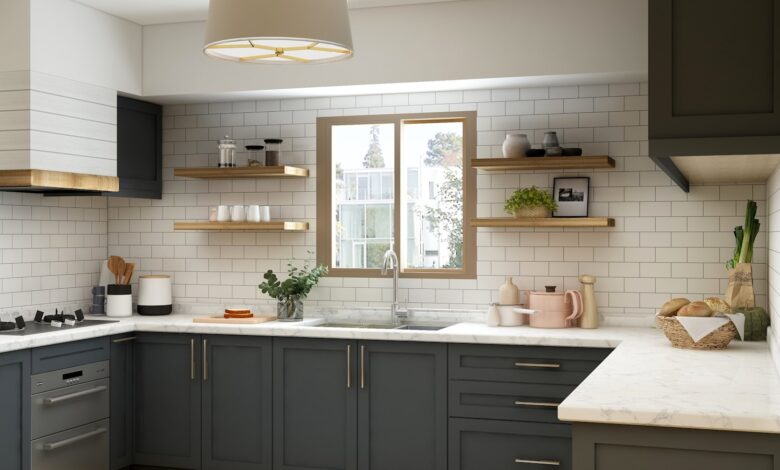
By the I Do It Yourself team — Jen, Mick, Steve and Ash.
This guide is for the home owner who has a kitchen that works but looks tired. Maybe it’s a 1990s pine-front, maybe it’s a 2008 builder-grade laminate, maybe it’s a perfectly fine kitchen that the previous owner painted hospital-cream. You don’t need to rip it out — you need to refresh it. Done well, a refresh delivers 80% of the visual impact of a full renovation for 10% of the cost, and it can be done over a few weekends without losing the use of the room for more than a day at a time.
Realistic budget: $1,500 to $8,000 for a proper DIY refresh covering cupboards, splashback, lighting, tapware and hardware. A full pull-and-replace renovation in 2026 starts at $25,000 and runs to $60,000+ for a galley or U-shape. Timeline for a refresh: 2 to 4 weekends of focused work, plus drying time between coats. The trick is sequencing — do not start on the cupboards before you’ve decided on the splashback, because the splashback colour drives the cupboard colour.
What you’re getting into
A kitchen refresh sits in a happy middle ground for DIY. Painting cupboards, swapping handles, changing pendants and fitting a peel-and-stick or tile splashback are all home-owner-friendly. Replacing the benchtop is a maybe — laminate sheet you can do, stone needs a stonemason. Plumbing and electrical past the powerpoint is a hard no without a licensed trade.
What you can DIY: cabinet painting, handle swap, splashback (peel-and-stick or tile), benchtop refinishing or laminate replacement, sink swap if same hole and same connections, pendant lights only if you’re using a Clipsal-style plug-in flex (NOT hardwired — that’s an electrician’s job under AS/NZS 3000), painting the walls and trim. What needs a trade: any new circuit, any hardwired light fitting, gas cooktop changes (gas fitter), any change to the plumbing rough-in for a sink in a new location, any rangehood ducting through external wall.
Tools and budget
- Cabinet painting kit: orbital sander, P2 dust mask, sugar soap, oil-based bonding primer (Zinsser BIN or Dulux 1Step Prep), 4-inch microfibre roller, 2-inch synthetic brush, drop sheets — $200–$350 in tools you’ll keep
- Cupboard paint: Dulux Aquanamel Semi-Gloss, Haymes Ultratrim, or Murobond Hardshell ($110–$140 per 4L; you’ll need 2 coats over 2L of primer)
- Handles: Bunnings $4 each up to designer at $35 each — budget $200–$700 for a 12-cupboard kitchen
- Splashback: peel-and-stick $40/m², subway tile $35/m², glass splashback (trade-supplied) $400–$700/m
- Pendant lights: $80–$400 each from Beacon, Lighting Direct, Temple & Webster — budget for sparky if hardwired ($150–$250 install)
- Tapware: Methven, Phoenix, Caroma mixers $250–$700 — plumber to install $150–$300
- Total realistic budgets: bare-minimum refresh $1,500 (paint + handles + tap + LEDs); mid-range $4,000–$5,000; high-end DIY refresh $8,000
Phase 1: Plan your refresh budget
Jen here. Before you buy a single tin of paint, sit at the kitchen bench with a coffee and a notebook and answer three questions. One: what is the one thing that bothers me most every day? Two: what is the cheapest thing I could change that would make me happy? Three: what is the most expensive change I could make that would still be cheaper than ripping the kitchen out? Spend an hour on this. It saves you thousands.
The decisions stack like this: splashback colour first (because it sets the palette), then cupboard colour (must complement the splashback), then benchtop (if you’re changing it), then handles (small but high-impact), then tapware and lighting. Do not buy paint before you have a splashback decision in writing — even if it’s “we are keeping the existing tiles”. I have watched home owners paint cupboards white, then realise the existing splashback is warm-cream, and the whole thing looks like a hospital.
Make a mood board. Pinterest it, or stick swatches on the fridge. Live with the colour decisions for a week before you commit. Order sample pots — Dulux and Haymes will both sell you 250ml testers — and paint A4 swatches you can move around the room at different times of day. The kitchen that looked perfect under fluoro at Bunnings will look completely different under your warm LEDs at home.
Phase 2: Cupboard refinishing
Jen again — this is my specialty and where most DIY refreshes go wrong. Cupboard painting is 90% prep and 10% paint. If you skip the prep, the paint will chip off the door edges within a year and you will hate me and your kitchen equally.
The proper sequence: take every door off (label them in pencil on the back hinge plate so you can put them back exactly where they came from), take every drawer front off, take every handle off and bag the screws by cupboard. Sugar soap every surface twice — kitchens have invisible grease film on every cabinet face. Sand with 180-grit on an orbital sander, vacuum, tack-cloth wipe. Two coats of bonding primer (Zinsser BIN-123 or Dulux 1Step Prep — these are designed to bond to laminate and melamine, regular primer will not). Light sand between coats with 240-grit. Then two coats of cabinet-grade enamel — Dulux Aquanamel Semi-Gloss is my go-to for water-based, Haymes Ultratrim if you want a harder-wearing finish. Do not use wall paint on cupboards. Ever.
Spray vs roll: a 4-inch microfibre roller leaves an “orange peel” texture that is acceptable on cabinet faces but not great on flat doors. If you want a sprayed finish, hire a HVLP sprayer ($60/day from Kennards) and practise on a piece of MDF first. Allow 7 days drying before you reattach doors and rehang — water-based enamels are touch-dry in 4 hours but do not reach full hardness for a week. Rehang too soon and the doors stick to the frames.
Phase 3: Splashback and benchtop options
Steve here. The splashback is the single biggest visual change you can make in a kitchen. There are three DIY-friendly options at three price points.
Cheapest: peel-and-stick vinyl tiles or sheets, $40–$60/m² from Bunnings or Carrara. Genuinely good now — the 2026 product is light-years ahead of what was around five years ago — but they have a 5–7 year life and will mark from heat behind a cooktop, so don’t put them within 200 mm of an exposed flame. Mid: real ceramic or porcelain subway tile, $35–$80/m². A weekend job for a confident DIYer; we have a tiling article that walks the cuts. High: glass splashback, which has to be templated and installed by a glass company because it gets cut to the millimetre — about $450–$700 per linear metre installed. Stunning, low-maintenance, a 20-year fix.
Benchtops are trickier. If you have laminate that is in structurally good condition (no swelling at the sink edge, no delamination), you can refinish with a benchtop paint kit (Rust-Oleum or Giani — about $180 a kit) and get a stone-look surface that lasts 5–8 years if you don’t chop directly on it. If the laminate is failing, replace the sheet — Laminex and Polytec sell pre-cut tops to standard sizes from $200/lm. If you want stone, get a stonemason to template and install (Caesarstone, Smartstone or Essastone $600–$1,200/lm installed). Do not try to template stone yourself.
Phase 4: Lighting upgrade
Ash here. Lighting transforms a kitchen more than people realise. Most older kitchens have one fluoro batten in the centre of the ceiling and that’s it — you end up working in your own shadow at the bench. The fix is layered lighting: ambient (downlights or a central fitting), task (under-cabinet LED strip over the bench), and feature (a pendant or two over the island).
What you can DIY in Australia: under-cabinet LED strip if it’s a plug-in 12V or 24V driver kit (Brilliant, HPM and Mercator all sell plug-in versions from $80) — that’s a Class III low-voltage system and is home-owner-legal. Swapping a halogen downlight for a like-for-like LED retrofit is also DIY if it’s the screw-out plug-and-socket type (BC, ES or quick-connect plug). Anything that involves cutting into 240V wiring, terminating into a ceiling rose, replacing a hardwired pendant with a different fitting type, or installing a new circuit — that’s me, that’s a sparky, and you’ll want a Certificate of Electrical Safety on completion.
For pendants over an island, the rule of thumb is the bottom of the pendant sits 750–900 mm above the benchtop. Two pendants for an island under 1500 mm long, three for anything 1800 mm and up, evenly spaced with the outer pendants 300 mm in from each end. Get the spacing wrong and the kitchen looks lopsided forever — measure twice before drilling.
Phase 5: Hardware and final touches
Mick here, batting cleanup. The last weekend is the most fun — handles, tapware, the new sink, the new appliances if you’re swapping any. This is where the kitchen actually looks new instead of “freshly painted”.
Handles: a 12-cupboard kitchen will have somewhere between 14 and 24 handles or knobs. Use a drilling jig — Bunnings sells a Kreg cabinet hardware jig for about $60 and it pays for itself by handle number four. Pick a hole pattern (96 mm, 128 mm or 160 mm centres are the common ones) and stick with it across the whole kitchen, even if you’re using two different finishes for upper vs lower cupboards. Mismatched centres look chaotic.
Tapware swap: turn the water off at the isolation valves under the sink, unscrew the supply hoses, undo the basin nut, lift out, replace, reverse. Then turn the water on slowly and check for leaks for 10 minutes. If your isolation valves don’t shut fully (common on older installs), call Tomo or your local plumber — don’t fight a corroded valve, you will snap the riser. Final touches: a fresh bead of clear silicone around the sink, polish the tapware, swap out the old kettle and toaster for ones that match your new colour palette (cheap trick, big visual payoff), and step back. You’re done.
The team’s verdict
If we were doing this tomorrow on a tired-but-functional 1990s kitchen, this is the run sheet. Weekend one: planning, ordering, sample pots, splashback decision locked in. Week two evenings: prep — doors off, sugar soap, sand, vacuum. Weekend two: prime and first coat on cupboards. Week three: second and final coats, dry. Weekend three: splashback install, handle swap, lighting (sparky on Saturday morning), tapware swap. Weekend four: rehang doors, accessories, deep clean, you’re cooking dinner in a different room.
The thing we want to underline: a refresh is not a renovation, and that’s the point. If you go into it expecting a refresh to give you a brand new kitchen, you’ll be disappointed and you’ll spend $20,000 trying to get there. If you go in knowing you’re polishing what’s already there, you’ll spend $4,000 and love your kitchen for another decade. Save the renovation for when the layout actually no longer works for your family — until then, refresh.
FAQs
Will the cupboard paint chip? Not if you prepped properly and used cabinet-grade enamel. Wall paint on cupboards will chip within months. Bonding primer + Aquanamel or Ultratrim + 7 days drying = a 5-year finish minimum.
Can I paint over melamine cupboards? Yes, with the right primer. Zinsser BIN-123 or Dulux 1Step Prep are designed for non-porous surfaces. Sand to 180-grit first to give the primer something to grip.
Do I need a sparky for a pendant light swap? If the existing fitting is hardwired, yes. If it’s a plug-in flex from a ceiling rose with a plug-and-socket connector (some IKEA fittings come this way), it can be DIY. When in doubt, ask Ash — a $200 sparky callout is cheaper than a house fire.
Is peel-and-stick splashback worth it? Honestly, yes for a rental or a short-term refresh. Not for a forever home. The 2026 products look great but they have a 5–7 year life and they’re not heat-rated for direct cooktop exposure.
Should I paint the inside of the cupboards too? No. It’s invisible work that adds 2 days to the project for almost no payoff. Save it for the next refresh in 8 years. The exception: if the cupboard interiors are stained, water-damaged or smelly from old contact paper, scrub them out with sugar soap and reline the shelves with fresh contact paper or shelf liner — much faster than painting and gives you the fresh feel without the time cost.
What about the rangehood and oven — should I replace them as part of a refresh? Only if they’re failing. A clean and a filter swap on an existing rangehood costs $20 and takes an hour, and visually it’s almost as good as new. A new wall oven runs $700–$2,000 plus sparky install — only worth it if the existing one is dying or you’re going from a basic builder-grade to a feature appliance. The kettle-and-toaster colour-match trick gets you 70% of the visual lift of new appliances for 5% of the cost.
Got a project we should write a guide for? Tell us.