How to Replace a Leaking Tap Washer
I was called to a place in Bardon last winter where the kitchen tap had been dripping for six months. The homeowner had been laying a towel in the sink at night so the noise didn’t wake the missus. When I pulled the spindle out it was a 1970s brass washer tap with the original red rubber washer in it — flattened, cracked, and grooved like a topographic map. Fifteen minutes and a $4 packet of washers from Reece later, the drip was gone. He’d spent more on the towel collection than the fix would have cost. Look mate, the rules exist for a reason, but they don’t exist to stop you doing this one. Replacing washers on a compression tap is one of the few plumbing jobs every Australian state lets a homeowner do — and the fix is genuinely a fifteen-minute task with five dollars in parts.
Here’s where the legal line sits before we start. Under the Plumbing Code of Australia and AS/NZS 3500, the homeowner is permitted to replace washers and tap handles on traditional flick-style or compression taps. That’s it. Replacing cartridges in mixer taps, swapping ceramic disc assemblies, anything inside a wall cavity, anything involving the hot or cold service line, anything involving the gas connection on a hot water unit — those are all licensed plumber jobs. Stick to washers on compression taps and your inside the homeowner DIY zone. Step outside it and your insurance walks away if something fails.
What you’ll need
- A 250 mm adjustable shifter (the stubby 150 mm doesn’t give enough leverage on a seized bonnet)
- A multi-grip pliers (Channellock-style) for restricted spaces, or a basin spanner if youre working under a vanity
- A flat-blade and Phillips screwdriver
- A pack of assorted tap washers from Reece, Bunnings or any hardware ($3–$5)
- A pack of tap O-rings — often sold together with the washers
- A clean rag and an old toothbrush for cleaning the spindle
- A tea towel to cover the basin (catches dropped screws before they hit the trap)
- Rubber gloves — chrome bonnets and old water get slippery
Step 1: Identify which tap is leaking and how it leaks
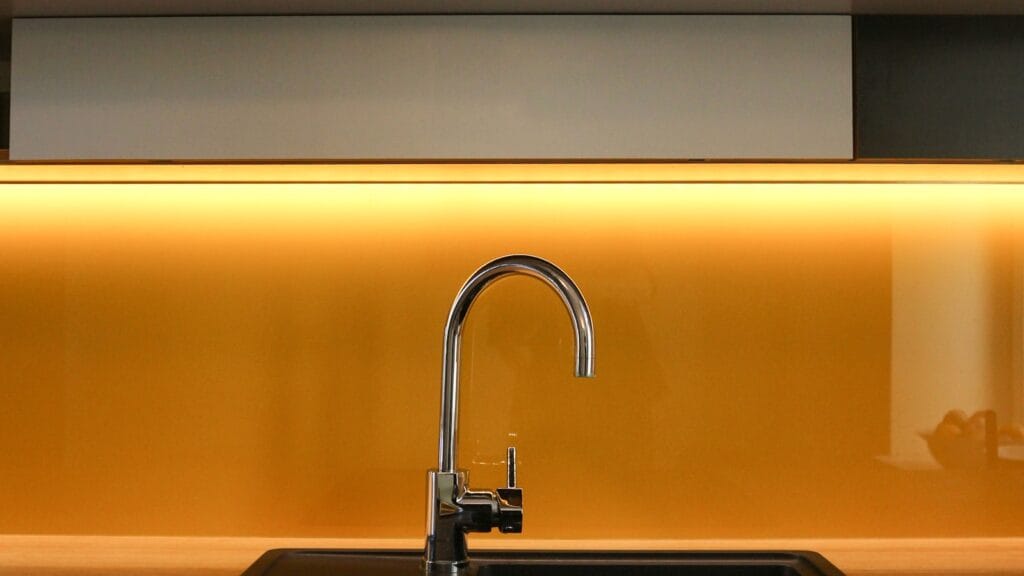
Two leak patterns to know. A drip from the spout when the tap is shut off means the rubber washer at the bottom of the spindle is worn — it’s not sealing against the seat any more. A leak around the handle or body when running means the O-ring on the spindle is worn — water is bypassing the seal up the shaft. Often you’ve got both, because they wear at similar rates. Replacing the washer is the same job in both cases, so do both at once while your in there. I’ve seen this go wrong more times than I can count when someone replaces the washer, doesn’t touch the O-ring, and rings me a week later because “the drip’s back” — except this time it’s leaking up the handle.
Step 2: Turn off the water at the isolation valve
Modern Aussie homes have an isolation tap under the sink or basin — a small chrome lever valve or a screw-style spindle on each supply line. Turn it 90° clockwise (lever) or wind it clockwise until it stops (screw). If the house is older and there’s no isolation valve, you’ll need to turn off the mains at the meter box. Open the tap fully after turning the supply off — confirms the water is actually shut and drains pressure from the line. Don’t skip this confirmation. Opening a tap with live mains pressure under it after you’ve removed the spindle is how people end up with a wet kitchen ceiling.
Step 3: Cover the drain
Tea towel over the basin, tucked into the plug hole. Small parts — the cap, the Phillips screw, the spindle washer — will fall during this job. Catching them now beats a $300 plumber callout to retrieve a screw from the trap. I’ve fished more grub screws out of basin traps than I care to admit. Cheaper to do once.
Step 4: Pop the cap off the handle
Most tap handles have a small plastic cap on top with the hot/cold or H/C logo. Pry it off carefully with a flat-blade screwdriver — there’s a notch you can hook into on the side. Don’t lever from the top or you’ll crack the cap. Underneath you’ll see a single Phillips or slotted screw holding the handle to the spindle.
Step 5: Unscrew and lift the handle off
Phillips screw out, lift the handle straight up. If it’s stuck (corrosion bonds the handle to the spindle on older taps), gently rock side-to-side as you pull. Don’t lever with the screwdriver against the porcelain — you’ll crack the basin, and that’s a whole new job. A drop of CRC or WD-40 around the spindle, five minutes’ wait, and most stuck handles release.
Step 6: Unscrew the bonnet and pull out the spindle
Below the handle sits a brass hex bonnet — that’s the nut that holds the spindle assembly into the tap body. Use the shifter or multi-grip pliers, anti-clockwise to undo. If it’s a chrome bonnet, wrap the jaws of the pliers in a rag so you dont scratch the finish. Once unthreaded, pull the entire spindle assembly straight out of the tap body. Lay it on the tea towel so you can see what your dealing with.
Step 7: Replace the washer at the bottom of the spindle
At the very bottom of the spindle there’s a rubber washer held in place with a small brass jam-nut or retaining screw. Unscrew the retainer, pop the old washer off — it’ll often be flattened, grooved or cracked in a perfect concentric ring matching the seat. Fit the new washer (same diameter — that’s why you bought a multi-pack), and screw the retainer back firmly. The new washer should sit perfectly flat in the recess, not tilted or pinched. If your assorted pack has rubber, fibre and red Walrus-brand washers, the standard kitchen/bathroom compression tap takes a 12 mm or 1/2″ rubber. Older laundry taps sometimes take 15 mm.
Step 8: Replace the O-ring on the spindle
Look up the spindle from the washer end — there’s usually one O-ring sitting in a groove on the upper section near the bonnet thread. Slip the old one off (a fingernail under the edge will lift it), wipe the groove clean with the old toothbrush, then slide the new O-ring on. A tiny smear of Selleys silicone plumbers grease on the new O-ring helps it seat without tearing as you reassemble. Never use vaseline or general grease — silicone grease only on potable water fittings.
Step 9: Reassemble in reverse
Spindle back into the tap body, hand-tight first so the threads catch cleanly. Bonnet on, tighten with the shifter — firm, not gorilla-tight. Brass bonnets crack under excessive torque and a cracked bonnet is a tap-body replacement, which is licensed work. Handle back on, Phillips screw in, indicator cap pressed back. Don’t over-torque the Phillips either — the spindle is brass and the screw is steel, and the steel wins.
Step 10: Slowly turn the water back on and test
Open the isolation valve slowly — full pressure on a freshly assembled tap can blow a seal that wasnt quite seated right. Run the tap for 30 seconds, then close it firmly (firm, not slammed) and watch for drips. If it’s still dripping from the spout, the washer’s slightly wrong size — go back and try the next size up from the pack. If it’s leaking around the handle, the bonnet wasnt tight enough — half a turn more with the shifter. Once it’s holding dry for five minutes with no weep, your done. Run a tissue around the joint to confirm — paper picks up moisture the eye misses.
When to call a tradie
Heres where the legal line sits. The homeowner exemption under AS/NZS 3500 covers washers, O-rings, tap handles, flexi hoses (in some states), toilet seats and toilet inlet valves. It does NOT cover: replacing the tap body itself, replacing or modifying any pipework, any work on fixed copper or PEX in walls or floors, any sewer line work, any gas work, and anything inside the hot water unit beyond operating the PTR lever. If your tap is a quarter-turn ceramic-disc, a mixer, or anything with branded cartridges — see our replace mixer tap cartridge guide for the cartridge swap, which is also DIY-legal. But if the tap body itself is cracked, leaking from inside a wall, or attached to a service that’s failing — that’s me on the end of the phone. Cheaper to do once.
Common screw-ups
- Wrong washer size. Assorted packs have 12, 15 and 20 mm. Take the old one to the shop to match diameter and thickness, or your back in 20 minutes.
- Over-tightening the bonnet. Cracks the brass thread inside the tap body. That’s a tap-body swap, licensed work.
- Forgetting the O-ring. You’ll fix the spout drip and start a new leak around the handle. Do both seals while the tap’s apart.
- Re-using a flattened washer “because it looks fine”. If it’s grooved on the sealing face, it won’t seal. Fresh washer or its a redo.
- Cranking the handle screw. Brass spindle, steel screw — the steel wins and strips the thread. Snug only.
Cost & time
$5–$10 in parts (washer multipack plus O-ring kit from Reece or Bunnings). $25 if you don’t own a shifter and multi-grip. Time: 15 minutes per tap for a confident first-timer, 25–30 for a complete novice including the “where’s the isolation valve” hunt. For a kitchen mixer, see the cartridge guide — different job, different parts.
The Tomo rule — wrap
If the tap is older than the house, or if it’s a quarter-turn ceramic disc, a mixer, or anything with branded cartridges — different job, different guide. Compression taps with rubber washers are the ones every Aussie state lets you do. The classic taps that came in 70s, 80s and 90s homes are home-owner territory and the fix is genuinely fifteen minutes. Heres where most weekend plumbing trouble starts: people try to extend the same logic to wall taps, copper joints and hot water units. Don’t. Stay inside the washer-and-flexi zone and your fine. Anything past that and you ring someone like me. Got a leak you cant figure out — under-sink, in-wall, or a tap that’s not a standard compression style? Send us a photo and we’ll tell you straight up whether it’s DIY or licensed.