How to Pack a Kitchen for Moving Day
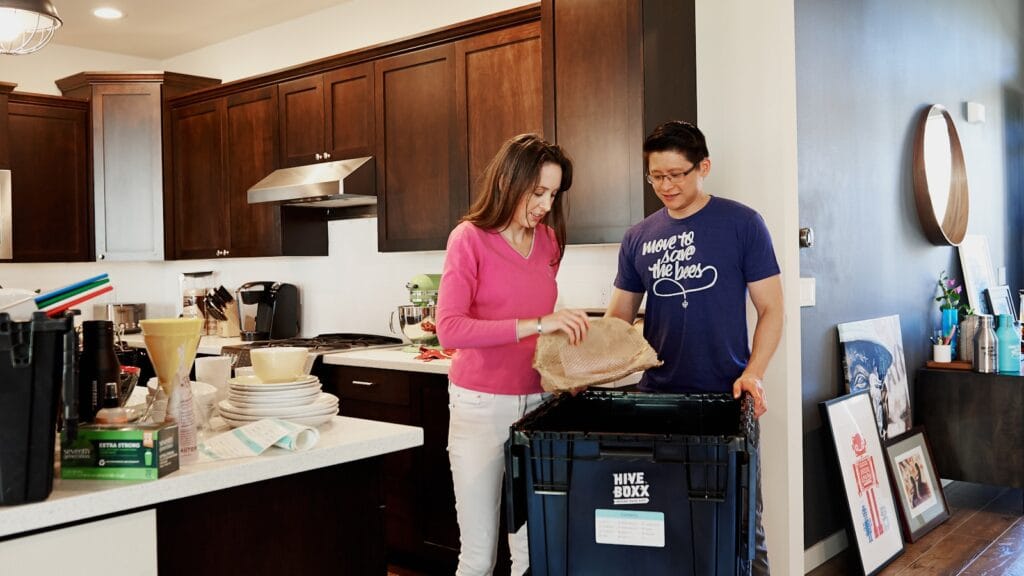
I helped my sister move out of her place in Subiaco last autumn — kitchen and all — and it taught me again why the kitchen is the room that breaks moves. She’d packed her bedroom in two hours and her lounge in three. The kitchen took us a full day, mostly because she started with the wrong drawer and ended up tipping every cupboard out at once. By 4pm there was a sea of Tupperware on the floor, no boxes left, and a half-packed pantry. We loaded the ute the next morning a tray at a time. The kitchen has more individual items than any other room, more fragile gear, more weight per square metre, and more “do I keep this?” decisions. Order matters. Heres how to knock it out without losing your mind or your dinner plates.
What you’ll need
- 15-25 medium cardboard boxes — not big, because heavy + big = a broken back
- 5 small “book boxes” for the heavy stuff (plates, cast iron, jars)
- Two rolls of butcher’s paper from Bunnings or Officeworks
- A roll of bubble wrap for the genuinely fragile gear
- Two rolls of packing tape and a tape gun
- A thick black marker for labelling
- A box of zip-lock bags for screws, fasteners, and small parts
- A clear plastic tub for your “first night” essentials — kettle, mugs, snacks
- Three garbage bags marked “donate”, “chuck”, and “recycle”
Step 1: Three days before — empty the fridge and freezer
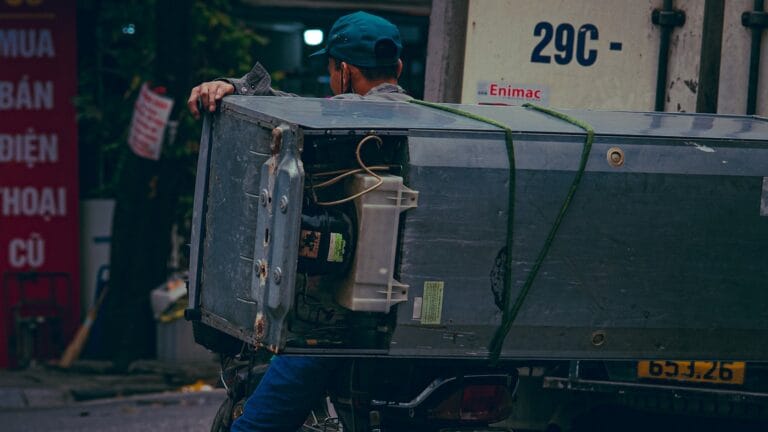
Eat, give away, or chuck. A fridge being moved should arrive empty and dry. Defrost the freezer the day before — wet ice melts slowly and ends up in the moving truck soaking your cardboard boxes. If you’re not moving the fridge itself, give it away on a community page or have it ready for council pickup. Don’t be the person trying to wedge a half-defrosted freezer into a removalist’s truck on moving day.
Step 2: Two days before — sort everything in three piles
Open every cupboard and put everything on the bench in three piles. Keep, donate, chuck. The kitchen is where most people hoard duplicates. Three garlic crushers? You need one. Six wooden spoons? Two will do. Half a packet of cake flour from 2023? Bin. This is the one chance you’ll get to declutter properly — taking three garlic crushers to the new kitchen wastes packing time, truck space, and unpacking time at the other end. Be ruthless. No worries about being precious here.
Step 3: Day before — pack the pantry first
Pantry contents are mostly small, dry, and they wont break. They’re the easy warm-up. Open boxes, half-finished spices, jars with two grains of rice left — bin them or use them up. Sealed pantry items go into medium boxes. Tape the bottom of each box firmly, double-tape the seam if its heavy. Vac-sealed bags of flour, oats and rice survive moves fine. Honey crystallises in cold weather — wrap honey jars individually in butcher’s paper because if a lid pops, you’ll never get honey out of cardboard.
Step 4: Pack the “first night” tub last but pack it now
One clear plastic tub. Kettle, two mugs, two plates, two sets of cutlery, a sharp knife, a chopping board, dish soap, a sponge, a tea towel, instant coffee/tea, salt and pepper, a roll of toilet paper, paracetamol, a phone charger. This tub goes in the back seat of your car or the cab of the ute, not the removalist’s truck. You will thank yourself at 9pm on moving night when youre too cooked to find anything else. If you’re doing the IDIY fridge move the same day, throw the fridge keys and trolley straps in the same tub.
Step 5: Wrap glasses and stemware in butcher’s paper, not bubble wrap
Butcher’s paper is what professional removalists use. Bubble wrap is reserved for the very fragile end — crystal, sentimental pieces, anything irreplaceable. Stand glasses in the small book boxes — never lay them flat. Each glass gets two sheets of paper, twisted into the rim so the inside is padded too. Pack tightly so the glasses don’t shift inside the box. A glass that can move can break itself by knocking the next one over.
Step 6: Plates packed vertically, not stacked
Wrap each plate in butcher’s paper. Stand them on their edges in the box, like records — vertical orientation. Stacked plates crack from the weight on top because the load focuses on the centre of each plate. Vertical plates can take three times the weight without chipping because the load goes through the rim. Fill any gaps with crumpled paper so nothing rattles. This is the trick that converts moving-day plate breakage from “almost guaranteed” to “almost never”.
Step 7: Pots, pans and bakeware — nest them with paper between
Stack biggest to smallest with butcher’s paper between each piece. Lids go in their own small box, zip-locked together by size if you’ve got a lot. Cast iron goes in book boxes — heavy stuff in small boxes, always. A 4kg Lodge pan in a wide box becomes a back injury. The same pan in a book box is liftable in one hand. The single most common moving-day disaster is a big box that nobody can lift safely, that bursts when someone tries.
Step 8: Knives and sharps — block first, blades wrapped
Slide knives back into the knife block first if you have one — secure the block with a couple of rubber bands around the slots so blades don’t slide out in transit. Loose knives get wrapped blade-first in butcher’s paper, then a layer of bubble wrap, then taped shut. Write “SHARP” in marker on the outside. Goes in a labelled box marked “open me last”. A removalist who slices their hand on a poorly packed knife will not forgive you, and the WorkCover paperwork is brutal.
Step 9: Small appliances — original boxes if you have them
Toaster, kettle, blender, coffee machine, Thermomix, air fryer — original packaging is best because it’s already shaped for the appliance. If you’ve thrown the boxes out, wrap the body in bubble wrap, secure the cord with a twist tie or velcro strap, and pack with butcher’s paper around it as cushion. Don’t box loose — appliances bouncing in a half-empty box ruin themselves and dent each other.
Step 10: Label every box on the side, not the top
Side labels are visible when boxes are stacked. Top labels are invisible the moment you put another box on top. Format: “KITCHEN — glasses — fragile” or “KITCHEN — pantry — heavy”. Removalists stack and orient based on what they can read on the side. Add an arrow showing which way is up. Five seconds of marker now saves twenty minutes of fishing in the new kitchen.
When to call a removalist or pro
If you’ve got serious antique china, hand-blown crystal, or a stand mixer worth more than $1,000, get a quote from a removalist for those specific pieces. Most will do a “fragile-only” half-load for $300-500, with proper crating for the genuinely valuable gear. For freestanding cooktops, ovens or rangehoods being relocated to a new kitchen, you need a licensed gas fitter (LP or natural gas) and a licensed electrician (hardwired oven). Don’t disconnect an oven yourself and turn up at the new place expecting a sparky to reconnect a job they didn’t disconnect — they’ll often refuse the job.
Common screw-ups
- Big box, heavy contents: nobody can lift it, it bursts, plates everywhere. Heavy stuff in small boxes, always.
- Stacked plates instead of vertical: guaranteed chipping. Records, not pancakes.
- Top-labelling boxes: invisible the moment one’s stacked on. Side-label every time.
- Skipping the first-night tub: youll be unpacking 30 boxes at 10pm to find the kettle. Just dont.
- Packing the fridge with food: defrost it, empty it, dry it. Always.
Cost & time
Boxes and paper from a removalist or Bunnings: $80-150 for a full kitchen. A cheap or free option is to ask at the local IGA or Bunnings — they often hand over flattened produce boxes for free if you ask the manager nicely. Packing the kitchen properly takes a focused 6-8 hours over two days. Rushing it in one day turns a 4-hour job into a 12-hour disaster. Removalist day rates in Perth run $100-150 an hour for two blokes and a truck; a one-bedroom unit is usually 3-4 hours, a full house 6-8. Factor a $200 tip if they’ve done a clean job — the back-saving they did for you is genuinely worth a beer.
Two days after — the unpack-order trick
Most people unpack the kitchen room-by-room and burn out by box eight. Smarter approach: unpack in order of daily use. First-night tub goes on the bench right away. Day two, pantry boxes get unpacked first — youll cook within 24 hours. Plates and cutlery next. Specialty gear (turkey roaster, ice cream maker, Bamix) goes into the back of the cupboards last and you might not see them for a week. Mark cupboards lightly with masking tape and pencil while youre placing things — easier to shuffle a label than to relocate a stack of pyrex once youve loaded the shelf. Out west the Perth summer keeps the kitchen warm and pleasant for unpacking; if you’re moving in Melbourne in July, do the kitchen first because nothing’s worse than a cold takeaway dinner on a freezing concrete floor.
Heavy stuff in small boxes, light stuff in big boxes, plates vertical, label on the side. Get those four right and the kitchen pack-up runs smooth. Worth doing once, worth doing right — because no one wants to be the person standing in a new kitchen at 10pm hunting for the kettle. If you’re packing the rest of the house too, our wardrobe packing guide and the fridge moving guide cover the trickier rooms. Beauty.